Sponsored by

Why the Smartest AI Strategy Starts With a Model That Knows Your Business
Generative AI has become impossible to ignore.
Whether it's writing emails, summarizing reports, brainstorming ideas, or answering questions, tools like ChatGPT have changed how people think about productivity. For many organizations, these platforms became the first introduction to large language models (LLMs), proving just how quickly AI can simplify everyday work.
But as businesses move beyond experimentation, one reality is becoming increasingly clear: using the same AI model as everyone else can only take you so far.
The best voice models, now across all channels

Most CX platforms do not own the voice. They orchestrate a workflow, then call a third party for speech and transcription. Every hop adds latency, cost, and another vendor to manage.
ElevenAgents is the opposite. They make the voice models the market builds on, and ElevenAgents puts full orchestration on top. Voice, transcription, text-based chat, and reasoning run in one vertically integrated pipeline, so responses come back in <400 milliseconds and sound human, not synthetic.
Plus, you keep full control. Plug in any LLM, integrate tools, webhooks, and MCP servers, and ground responses in your knowledge base. Get an agent live in minutes, then A/B test with Experiments, enforce Guardrails, and version every change.
The payoff: more human conversations, lower latency, and far less time stitching infrastructure together. You build on the models you already trust. Pricing is transparent and flat at $0.08 per minute.
The real advantage doesn't come from simply having access to AI. It comes from having AI that understands your business, your customers, your industry, and the way your organization actually operates.
That is where custom large language models begin to separate themselves from generic AI tools.
Tip: Before adopting another AI platform, ask whether it truly understands your organization's knowledge—or if it's simply generating answers from generalized information.
Looking For Stable Retirement Income Without Guesswork?

If you want dependable income and less market stress, annuities can be a strong fit. Leverage Planning helps you compare rates and features across 30+ established insurers, with guidance from licensed annuity advisors who are not tied to one carrier.
• Side By Side Comparisons
• Competitive Rates And Clear Tradeoffs
• Support From Quote To Purchase
Minimum investment: $50,000
Check Rates Now
Generic AI Is Powerful, but It Doesn't Know Your Business
Public AI models are trained using enormous collections of publicly available information. That broad knowledge allows them to answer an impressive range of questions, but it also creates limitations when accuracy, consistency, and industry expertise become critical.
Every organization has its own terminology, internal processes, policies, compliance requirements, and preferred way of communicating. Generic AI has no built-in understanding of those details unless they are provided during every interaction—and even then, consistency can vary.
This often results in responses that sound correct but overlook important business context. A recommendation may ignore company policies, use the wrong tone for customer communication, misunderstand industry-specific language, or generate information that requires significant human correction.
As AI becomes more integrated into daily operations, these small inaccuracies become much more significant.
The more specialized the work, the greater the need for AI that understands specialized knowledge.
Tip: If employees frequently rewrite AI-generated responses to match company standards, it may be a sign that the model lacks the context your organization actually needs.
A Custom LLM Learns the Language of Your Organization
A custom large language model isn't built to know everything.
It's built to know your business exceptionally well.
Instead of relying solely on general knowledge, custom models are trained or fine-tuned using proprietary information such as internal documentation, product information, technical manuals, customer interactions, historical knowledge bases, code repositories, and organization-specific terminology.
This allows the AI to generate responses that are not only more accurate but also far more relevant.
Rather than sounding like a generic chatbot, the model reflects the organization's preferred communication style, understands recurring business scenarios, and responds using language that aligns with established standards.
The result is greater consistency across teams, faster access to reliable information, and stronger confidence in the AI's recommendations.
Most importantly, employees spend less time correcting responses because the model begins with the right context instead of guessing.
Tip: The quality of an AI model depends heavily on the quality of the knowledge it learns from. Organized, accurate, and well-maintained data will always produce stronger results than larger volumes of outdated information.
Introducing The First Agentic CRM

Get revenue agents, workflows, and automations across every stage of your motion. Access customer data in real time through Attio's web app, MCP, API, and SDK.
Then Ask Attio anything about your business and get instant answers.
It's the CRM that runs the work behind every win.

Every Industry Faces Different Challenges—and AI Should Reflect That
No two industries operate under the same rules.
Financial organizations work within strict regulatory environments where precision and compliance are essential. Healthcare providers rely on highly specialized medical terminology while maintaining patient safety and privacy. Legal professionals require accurate interpretation of contracts, regulations, and case law. Marketing teams need AI that consistently reflects a brand's voice across every campaign.
A generic model cannot automatically master these specialized requirements.
Custom LLMs allow organizations to build AI that understands industry-specific language, follows internal standards, and supports decision-making within clearly defined boundaries.
Instead of forcing businesses to adapt to AI, customization allows AI to adapt to the business.
That shift makes a significant difference in both reliability and long-term adoption.
Tip: Choose AI solutions that fit the complexity of your industry rather than assuming one model can perform equally well across every type of work.
What if your money could drive itself to your goals?
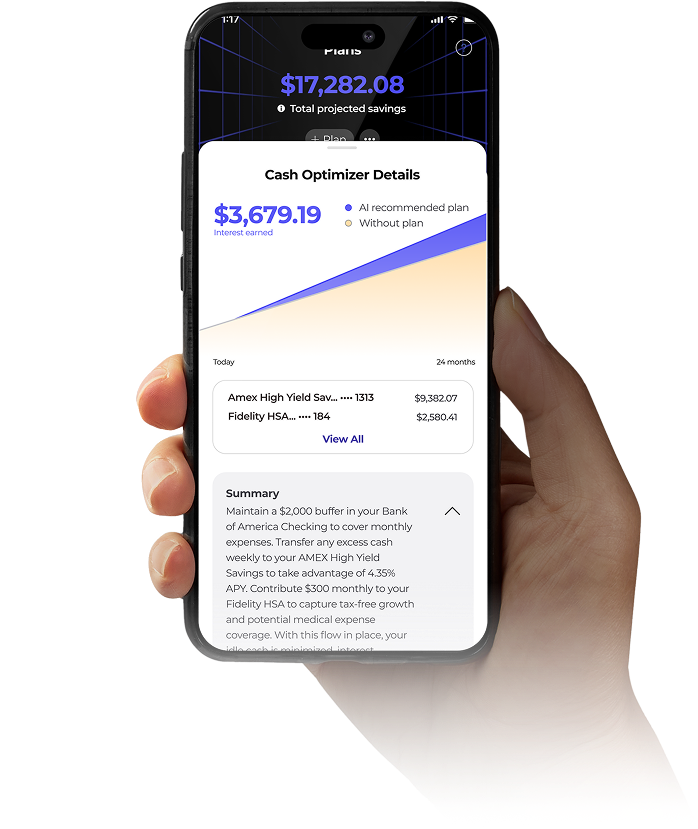
Any bank, any account, Piere makes it possible. In seconds, Piere analyzes your spending, income, wants, and goals, then creates fully automated plans for your money to follow.
- Save money automatically when you get paid — your money moves itself to the right account at the right interest rate
- Repay debt and stay debt free - Piere smartly determines which accounts to pay and when for the biggest impact
- Spend smarter — Piere keeps only the money you need for monthly expenses in your checking, moving the rest to high-yield accounts for safekeeping (and less temptation)
Get started in just seconds, and if you don't grow by at least $120 in your first year, we’ll give you back the difference.
Learn More
The Greatest Value Comes From Integration—Not Just Intelligence
Many organizations measure AI success by how well it answers questions.
A better measure is how effectively it improves everyday work.
A custom LLM becomes significantly more valuable when integrated directly into existing workflows. Instead of requiring employees to switch between multiple applications, AI can retrieve internal knowledge, assist with documentation, support customer interactions, summarize information, and automate repetitive processes from within the systems people already use.
This creates measurable improvements in speed, consistency, and operational efficiency.
Real-world implementations have demonstrated meaningful gains when organizations combine customization with workflow integration. Fine-tuned AI models have improved documentation accuracy in healthcare settings and significantly reduced customer response times in retail support operations because the technology was designed around real business processes rather than operating as a standalone chatbot.
The lesson is clear: intelligence alone doesn't create transformation.
Integration does.
Tip: Evaluate AI based on how well it fits into existing workflows. Technology creates far greater value when it reduces friction instead of adding another tool employees need to manage.
Building a Custom AI Starts With Strategy, Not Technology
Developing a custom language model is more than a technical project.
It begins by understanding where AI can create meaningful business value.
Organizations typically start by identifying repetitive knowledge-intensive tasks, assessing the quality of available data, selecting an appropriate AI architecture, testing model performance, and continuously refining outputs based on real-world feedback.
Just as important are governance and security.
Clear guardrails help ensure sensitive information remains protected, regulatory requirements are met, and AI-generated responses remain reliable as the model evolves.
Customization isn't a one-time event.
It's an ongoing process of improving how AI supports the organization as its knowledge, products, customers, and priorities continue to grow.
Businesses that approach AI strategically are not simply adopting another technology—they are building an organizational capability that becomes more valuable over time.
Tip: Don't begin with the question, "Which AI model should be used?" Start with, "Which business problem deserves to be solved first?" The technology should always support the strategy—not define it.
Generative AI opened the door to what's possible.
Custom large language models are what allow organizations to move beyond possibility and create meaningful, lasting impact.
The future won't belong to businesses using exactly the same AI as everyone else.
It will belong to those building AI that understands their knowledge, reflects their expertise, supports their workflows, and grows alongside the organization itself.
Because when AI truly understands the business it's serving, it stops acting like a chatbot—and starts becoming a genuine competitive advantage.
What’s your next spark? A new platform engineering skill? A bold pitch? A team ready to rise? Share your ideas or challenges at Tiny Big Spark. Let’s build your pyramid—together.
That’s it!
Keep innovating and stay inspired!
If you think your colleagues and friends would find this content valuable, we’d love it if you shared our newsletter with them!
PROMO CONTENT
Can email newsletters make money?
As the world becomes increasingly digital, this question will be on the minds of millions of people seeking new income streams in 2026.
The answer is—Absolutely!

That’s it for this episode!
Thank you for taking the time to read today’s email! Your support allows me to send out this newsletter for free every day.
What do you think for today’s episode? Please provide your feedback in the poll below.
How would you rate today's newsletter?
Share the newsletter with your friends and colleagues if you find it valuable.
Disclaimer: The "Tiny Big Spark" newsletter is for informational and educational purposes only, not a substitute for professional advice, including financial, legal, medical, or technical. We strive for accuracy but make no guarantees about the completeness or reliability of the information provided. Any reliance on this information is at your own risk. The views expressed are those of the authors and do not reflect any organization's official position. This newsletter may link to external sites we don't control; we do not endorse their content. We are not liable for any losses or damages from using this information.