In partnership with

How Outcomes Expand When ‘Reasonable’ Stops Being the Strategy
There is a quiet pattern behind stalled outcomes that rarely gets named directly. It is not lack of intelligence, and not lack of effort. It is something more subtle: a tendency to choose actions that feel acceptable instead of actions that actually move the problem forward.
In high-stakes situations—where one decision changes everything that follows—this tendency becomes costly. Not immediately visible, but cumulative. The outcome looks like effort was made, yet nothing meaningful shifts.
A useful way to understand this is through a hidden internal mechanism that shows up in decision-making: a preference for “safe-shaped action” over effective action.
This is where things quietly break.
Turn AI into Your Income Engine

Ready to transform artificial intelligence from a buzzword into your personal revenue generator?
HubSpot’s groundbreaking guide "200+ AI-Powered Income Ideas" is your gateway to financial innovation in the digital age.
Inside you'll discover:
A curated collection of 200+ profitable opportunities spanning content creation, e-commerce, gaming, and emerging digital markets—each vetted for real-world potential
Step-by-step implementation guides designed for beginners, making AI accessible regardless of your technical background
Cutting-edge strategies aligned with current market trends, ensuring your ventures stay ahead of the curve
Download your guide today and unlock a future where artificial intelligence powers your success. Your next income stream is waiting.
The Hidden Force Behind “Reasonable” Effort
When a difficult situation appears, the mind often defaults to something that feels socially and professionally safe. The action taken is not chosen for maximum effectiveness. It is chosen for minimum risk of judgment.
This pattern shows up in predictable ways:
Choosing widely accepted solutions first, even when context is unclear
Stopping after the first attempt fails
Avoiding approaches that might look unconventional or excessive
The result is a behavior loop where effort is real, but exploration is limited.
Costco’s Best-Kept Secrets: 10 Weird Tricks Only Superfans Know
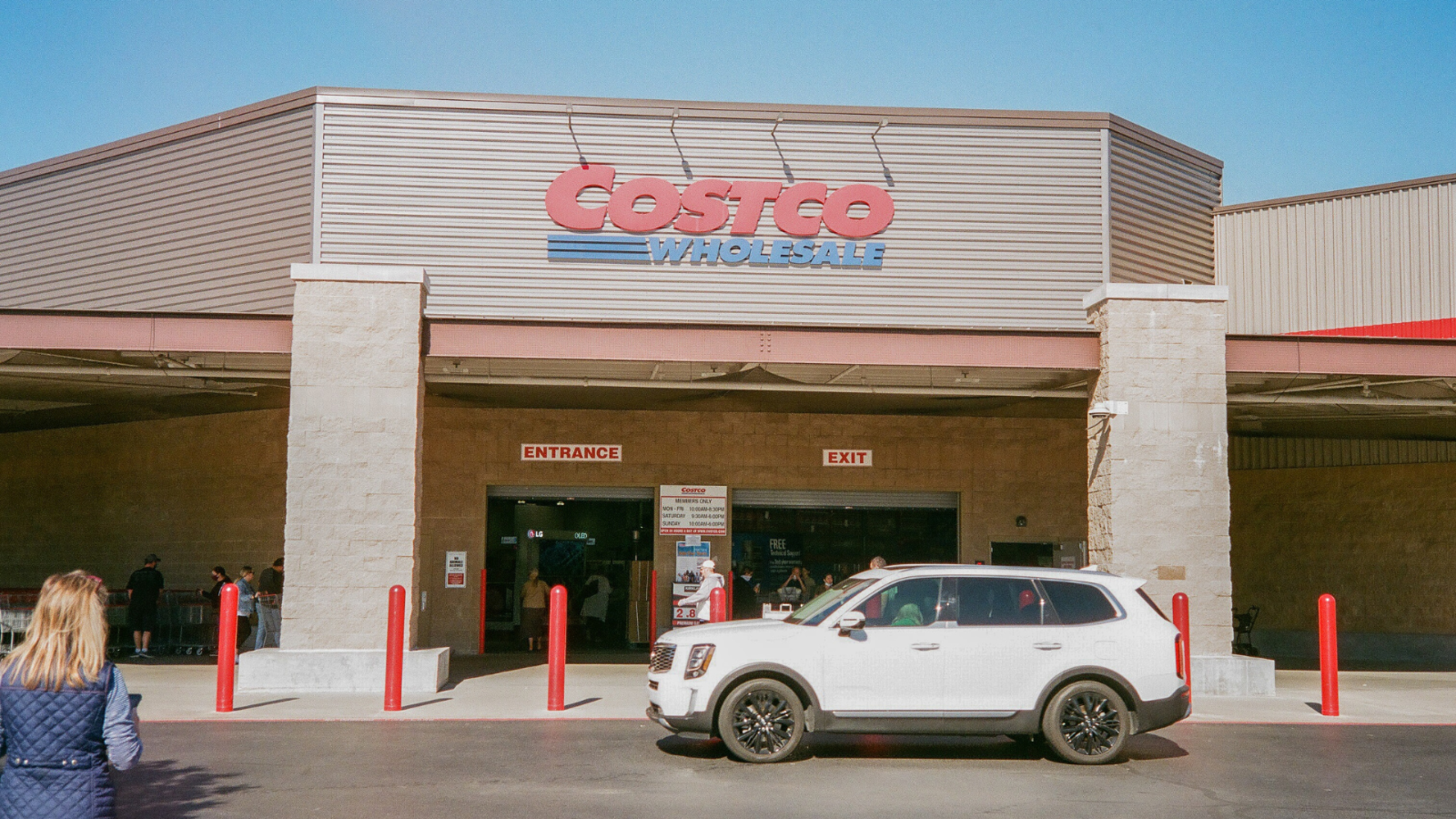
Do you shop at Costco? Then you know the thrill of saving money. But you might be missing other smart ways to stretch your dollars. Check out our list of genius money hacks—almost as good as that $1.50 hot dog!
Learn More
This internal pattern can be described as a “default compliance mode.” It prioritizes looking appropriate over fully engaging with the problem space.
In simple terms: the action taken is often designed to avoid criticism more than to solve the problem.
And in environments where outcomes matter more than appearances, this becomes a quiet limitation.
Tip: When the first solution feels socially safe, assume it is not the full solution space.
Why “One Attempt and Stop” Becomes the Norm
Many important problems are treated as if they have a single correct intervention. If that intervention does not work, the conclusion is often that the problem is harder than expected, or not solvable at the moment.
But most real-world constraints behave differently. They are layered, not binary.
Behind the scenes, several competing motivations often shape behavior:
Avoiding discomfort from pushing harder than expected
Avoiding the risk of appearing inexperienced
Avoiding solutions that require escalation or persistence
This creates an invisible conflict between two internal goals:
Achieving the outcome
Preserving psychological comfort and social safety
The second goal often wins without being explicitly acknowledged.
This is why many efforts stop early. Not because options are exhausted, but because the next steps require a level of persistence that feels socially or emotionally expensive.
The challenge is not lack of strategy. It is premature closure of strategy exploration.
Tip: Treat stopping after the first failure as a signal that exploration has barely begun.
Ask Attio anything: prep for calls, update records, spot deals at risk Over 4,000 startups including Granola, Wispr Flow, and Lightdash, already use Attio. Try Attio for free.

The Cost of “Standard Solutions” in Complex Situations
In many fields, standard solutions exist for good reason. They reduce risk, simplify decision-making, and prevent unnecessary experimentation in routine cases.
However, when applied to complex or unusual situations, standard solutions often become limiting.
A recurring pattern appears:
The first-line solution is applied
It produces partial or no improvement
No structured follow-up alternatives are introduced
The situation stabilizes at “acceptable failure”
The key issue is not that the first solution is wrong. It is that it is treated as complete.
Complex problems rarely resolve with a single intervention. They require iteration, adjustment, and willingness to reframe the problem after initial feedback.
When that loop is missing, outcomes plateau.
The system appears functional, but only at surface level. Beneath that, unresolved complexity remains untouched.
Tip: If a solution is applied without a planned second step, assume the approach is incomplete.
Thinking about Reddit ads? Get $500 in free credit when you spend $500 and expert 1:1 guidance

500M+ people use Reddit every month. By showing up where these users research and validate products, you can tap into the conversations that drive more trust and higher conversions.
And making ads is simple: with the Simple Create campaign builder, you can launch in minutes. Plus, Reddit offers free, 1:1 guidance from an ads expert to help you start and optimize your campaign.
Reach your audience on the platform they already trust.
Launch your first Reddit campaign ↗️
New accounts only, limit 1 per account, additional terms apply.
What Changes When “Finding a Way” Becomes the Default
A different mode of thinking emerges when the assumption shifts from “this might not work” to “this will work, but not yet.”
This is not optimism in the emotional sense. It is operational persistence. The assumption is that failure is informational, not final.
Under this mode, constraints are no longer endpoints. They become variables to be tested:
If one path fails, another is attempted
If access is blocked, alternate channels are explored
If standard systems fail, unconventional routes are considered
What changes is not intelligence, but persistence structure. The problem is no longer solved in a single attempt. It is treated as an unfolding system with multiple entry points.
This shift often produces solutions that initially appear non-standard. That reaction is expected, because most systems are optimized for average-case behavior, not edge-case persistence.
However, edge-case persistence is often exactly what complex outcomes require.
Tip: Replace “this won’t work” with “what would have to be true for this to work?”
The Practical Discipline of Replacing Default Limits
Over time, the real skill is not generating more ideas. It is identifying where thinking has prematurely closed.
Most limits are not physical. They are assumptions reinforced by repetition:
“This has already been tried”
“This is too difficult”
“This is not how it is done”
Each of these may be partially true, but none define the full boundary of possibility.
The difference between constrained outcomes and expanded outcomes often comes from one behavior change: refusing to stop at the first plausible answer.
In practice, this means:
Extending attempts beyond the first failure point
Actively seeking alternative paths rather than waiting for them
Treating discomfort as a signal of unexplored options, not invalid effort
Over time, this builds a different relationship with constraints. They stop being treated as final judgments and start becoming testable hypotheses.
The shift is subtle but decisive: reality becomes less like a fixed boundary and more like a negotiable system.
And once that perception changes, effort begins to compound instead of stall.
Tip: The first “no” is rarely the boundary—it is usually just the first checkpoint.
What’s your next spark? A new platform engineering skill? A bold pitch? A team ready to rise? Share your ideas or challenges at Tiny Big Spark. Let’s build your pyramid—together.
That’s it!
Keep innovating and stay inspired!
If you think your colleagues and friends would find this content valuable, we’d love it if you shared our newsletter with them!
PROMO CONTENT
Can email newsletters make money?
As the world becomes increasingly digital, this question will be on the minds of millions of people seeking new income streams in 2026.
The answer is—Absolutely!

That’s it for this episode!
Thank you for taking the time to read today’s email! Your support allows me to send out this newsletter for free every day.
What do you think for today’s episode? Please provide your feedback in the poll below.
How would you rate today's newsletter?
Share the newsletter with your friends and colleagues if you find it valuable.
Disclaimer: The "Tiny Big Spark" newsletter is for informational and educational purposes only, not a substitute for professional advice, including financial, legal, medical, or technical. We strive for accuracy but make no guarantees about the completeness or reliability of the information provided. Any reliance on this information is at your own risk. The views expressed are those of the authors and do not reflect any organization's official position. This newsletter may link to external sites we don't control; we do not endorse their content. We are not liable for any losses or damages from using this information.