In partnership with

The New Shape of Teams That Actually Get Things Done
For years, building software followed a familiar pattern. One group decided why something mattered. Another determined what should be built. Then a much larger team figured out how to make it happen. Every idea passed through layers of meetings, documentation, approvals, and handoffs before reaching the finish line.
That structure worked because translating ideas into working products required a lot of human coordination.
Today, that assumption is changing.
Artificial intelligence isn't simply writing code faster or answering questions more efficiently. It's removing many of the translation tasks that once connected every layer of an organization. The result isn't just faster work—it's a completely different way of organizing people.
Thinking about hiring globally? Start with an EOR.

The best person for your next role might not live near your office—or even in the same country.
More companies are realizing they don't need to open entities everywhere just to access global talent. Instead, they're using EOR to hire internationally faster, stay compliant, and avoid building local infrastructure before they're ready.
Oyster's EOR helps companies hire, pay, and support employees in 180+ countries while Oyster handles payroll, compliance, taxes, and local employment requirements.
The companies adapting successfully aren't replacing people with AI. They're redesigning work around what humans do best and allowing AI to handle what machines can now accomplish more efficiently.
Tip: When evaluating how AI fits into a team, don't focus only on which jobs may change. Instead, identify which repetitive handoffs and manual conversions can disappear altogether.
Turn AI into Your Income Engine
Ready to transform artificial intelligence from a buzzword into your personal revenue generator? Our groundbreaking guide "200+ AI-Powered Income Ideas" is your gateway to financial innovation in the digital age.
Inside you'll discover:
• A curated collection of 200+ profitable opportunities spanning content creation, e-commerce, gaming, and emerging digital markets—each vetted for real-world potential
• Step-by-step implementation guides designed for beginners, making AI accessible regardless of your technical background
• Cutting-edge strategies aligned with current market trends, ensuring your ventures stay ahead of the curve
Download your guide today and unlock a future where artificial intelligence powers your success. Your next income stream is waiting.
Get Your Guide
AI Didn't Replace Roles—It Changed the Nature of Work
One of the biggest misconceptions surrounding AI is that it targets specific professions.
In reality, AI is far better understood as replacing certain types of work rather than entire careers.
Tasks that involve translating one format into another—turning requirements into code, converting customer requests into support tickets, summarizing reports, drafting documentation, or transforming structured information into another output—are becoming dramatically faster through AI agents.
That doesn't eliminate the need for people.
It increases the importance of something much harder to automate: judgment.
Knowing which problem deserves attention, deciding which solution is worth building, identifying trade-offs, and recognizing when something doesn't meet expectations all require human reasoning that extends beyond pattern recognition.
Ironically, as AI makes execution easier, decision-making becomes more valuable.
Having unlimited ability to build means very little if the wrong things are being built.
Tip: Instead of competing with AI on speed, strengthen the skills AI cannot easily replicate—critical thinking, decision-making, problem framing, and sound judgment.
Introducing The First Agentic CRM

Get revenue agents, workflows, and automations across every stage of your motion. Access customer data in real time through Attio's web app, MCP, API, and SDK.
Then Ask Attio anything about your business and get instant answers.
It's the CRM that runs the work behind every win.

The Most Valuable Teams Will Be Smaller—but More Capable
For decades, organizations grew by adding more specialists to manage growing complexity.
Every new initiative introduced additional coordinators, project managers, approval chains, meetings, and communication layers designed to keep everyone aligned.
AI is beginning to reduce the need for much of that coordination.
Instead of relying on multiple people to move work from one department to another, AI agents can perform many of those transitions almost instantly. Information no longer has to stop at every checkpoint before moving forward.
That doesn't mean organizations become less collaborative.
It means collaboration shifts toward solving meaningful problems rather than managing administrative processes.
Future teams are likely to be leaner, but each person will carry broader responsibilities. Rather than focusing on one narrow function, individuals will contribute across planning, design, validation, quality, and decision-making while AI supports execution behind the scenes.
Success will depend less on the size of the team and more on the clarity of its direction.
Tip: Measure a team's effectiveness by the quality of decisions it produces—not by the number of meetings, approval layers, or people involved in completing the work.
Leadership Is Becoming More Hands-On Than Ever
One of the biggest shifts AI introduces isn't technological—it's managerial.
Traditionally, many leadership roles revolved around coordinating people, assigning work, tracking progress, and communicating updates between departments.
As AI reduces administrative coordination, those responsibilities alone become less valuable.
Modern leadership increasingly requires direct contribution.
That contribution doesn't necessarily mean writing software or performing technical work. It means remaining closely connected to outcomes, shaping direction, improving quality standards, solving difficult problems, and helping teams make better decisions.
Leaders who stay engaged with the work develop stronger context and respond more effectively when challenges emerge.
Meanwhile, organizations that continue relying solely on meetings, reports, and status updates may discover those activities contribute far less value than they once did.
Being involved has become more important than simply overseeing.
Tip: Whether leading a project or supporting one, ask regularly: Is today's work creating progress—or simply creating updates about progress?
What if your money could drive itself to your goals?
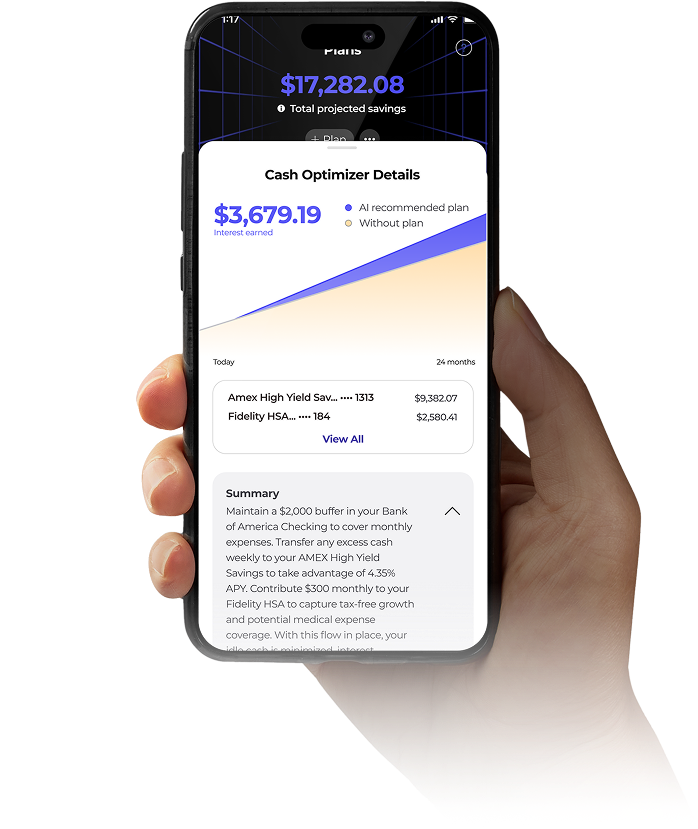
Any bank, any account, Piere makes it possible. In seconds, Piere analyzes your spending, income, wants, and goals, then creates fully automated plans for your money to follow.
- Save money automatically when you get paid — your money moves itself to the right account at the right interest rate
- Repay debt and stay debt free - Piere smartly determines which accounts to pay and when for the biggest impact
- Spend smarter — Piere keeps only the money you need for monthly expenses in your checking, moving the rest to high-yield accounts for safekeeping (and less temptation)
Get started in just seconds, and if you don't grow by at least $120 in your first year, we’ll give you back the difference.
Learn More
Human Judgment Is Becoming the Competitive Advantage
AI can generate code, analyze documents, summarize information, and complete repetitive workflows at impressive speed.
What it cannot fully replace is accountability.
Someone still needs to determine whether the results make sense, whether they align with business goals, whether ethical considerations have been addressed, and whether quality standards have been met.
This is where experienced professionals become increasingly valuable.
Rather than spending time translating information between teams, their focus shifts toward establishing guardrails, defining success, validating outputs, and ensuring AI operates within clearly defined boundaries.
Think of AI as an exceptionally fast worker that still requires thoughtful supervision.
The better the guidance, the better the outcome.
Organizations that invest in strong governance, evaluation methods, and quality standards will gain far more from AI than those relying solely on automation.
Tip: Don't judge AI by how much work it completes. Judge it by how consistently it produces results that people can trust.
The Future Belongs to Teams That Stay Close to the Work
Perhaps the most significant lesson isn't about technology at all.
It's about proximity.
The most effective organizations are reducing the distance between ideas and execution. Instead of passing work through endless layers of interpretation, they are empowering smaller groups to make decisions, validate results, and adapt quickly while AI handles much of the repetitive execution.
This creates organizations that move faster—not because people are working harder, but because unnecessary friction has been removed.
Human expertise becomes focused where it creates the greatest impact: setting direction, exercising judgment, solving ambiguity, and ensuring every decision supports meaningful outcomes.
AI doesn't eliminate the need for talented people.
It simply raises the importance of the work that only people can truly own.
And that's where lasting value will continue to be created.
Tip: As AI becomes part of everyday work, spend less time asking what tasks can be automated and more time identifying where human insight makes the biggest difference. That's where long-term value continues to grow.
What’s your next spark? A new platform engineering skill? A bold pitch? A team ready to rise? Share your ideas or challenges at Tiny Big Spark. Let’s build your pyramid—together.
That’s it!
Keep innovating and stay inspired!
If you think your colleagues and friends would find this content valuable, we’d love it if you shared our newsletter with them!
PROMO CONTENT
Can email newsletters make money?
As the world becomes increasingly digital, this question will be on the minds of millions of people seeking new income streams in 2026.
The answer is—Absolutely!

That’s it for this episode!
Thank you for taking the time to read today’s email! Your support allows me to send out this newsletter for free every day.
What do you think for today’s episode? Please provide your feedback in the poll below.
How would you rate today's newsletter?
Share the newsletter with your friends and colleagues if you find it valuable.
Disclaimer: The "Tiny Big Spark" newsletter is for informational and educational purposes only, not a substitute for professional advice, including financial, legal, medical, or technical. We strive for accuracy but make no guarantees about the completeness or reliability of the information provided. Any reliance on this information is at your own risk. The views expressed are those of the authors and do not reflect any organization's official position. This newsletter may link to external sites we don't control; we do not endorse their content. We are not liable for any losses or damages from using this information.