In partnership with

When Code Becomes Cheap, Discipline Becomes Expensive
There is a quiet but fundamental shift happening in software development. The cost of producing code has dropped dramatically. Systems that once required careful manual effort can now be generated quickly, repeatedly, and at scale. What used to be scarce has become abundant.
That sounds like a productivity win, but it changes where the real constraint sits. When code was expensive, effort naturally enforced quality. Engineers had to think before they wrote. Now, thinking is no longer enforced by cost. It must be enforced by process.
Your CS team knew about the churn risk before the renewal call.

Tuesday morning, #cs-team. Viktor posted account health updates for the 12 accounts up for renewal this quarter: ticket volume, NPS shift, product adoption delta, QBR action items still open.
For one account, a note: "Three CSAT scores below 6 in 14 days, all from the same admin. Their power user moved teams in March. Recommend reaching out before Friday's renewal call."
Your CSM didn't pull a report. The AE got the same intel in #sales. Your VP CS reviewed the full renewal pipeline over coffee.
20,000+ teams. Viktor lives in Slack and Microsoft Teams. Connects to Gainsight, Zendesk, HubSpot, Salesforce, Intercom, and 3,000+ other tools.
"It was almost instantly adopted by the bulk of my team." Boris, CEO, Space Dinosaurs.
This is why the old assumption—“better code comes from better writing”—is no longer sufficient. The bottleneck is no longer creation. It is evaluation. The question is no longer “can this be built?” but “can this be trusted, validated, and safely changed again?”
The danger is not low-quality AI output. The danger is high-volume, unverified output accumulating faster than understanding can keep up.
Tip: Treat code generation as unlimited supply and shift all rigor into validation and verification systems.
Explore Degree Programs Tailored to You

At Education Directory, we understand that choosing the right degree program is a crucial step toward your future success. Our platform offers personalized assistance to help you discover programs that match your interests and career objectives.
How it works:
Step 1: Explore Areas of Study
Expand your skills or start something new, discover colleges by subject areas that matter to you.
Step 2: Refine Your Search
Narrow down your college search based on your desired interests
Step 3: Compare Institutions
Compare top schools and decide which institutions best fit your need
Get Started
This is an offer for educational opportunities and not an offer for nor a guarantee of employment. Students should consult with a representative from the school they select to learn more about career opportunities in that field. Program outcomes vary according to each institution’s specific program curriculum.
Why systems degrade faster when production becomes effortless
When software creation becomes cheap, systems start to behave differently. Code is no longer a carefully maintained artifact. It becomes disposable, regenerated frequently, and modified without the same friction that once slowed change.
This introduces a subtle but critical problem: entropy increases unless something actively prevents it. Every change becomes cheaper to make, which means inconsistent patterns, duplicated logic, and subtle mismatches in behavior can accumulate quickly.
Historically, durability came from resistance to change. Now durability must come from structure around change. That means defining expected behavior more clearly, testing more rigorously, and observing systems continuously rather than assuming correctness from inspection alone.
This shift mirrors earlier infrastructure transitions. Systems became more reliable when components were treated as replaceable rather than manually repaired. Now the same principle applies to code: replacement is safer than mutation only if correctness is continuously validated.
Without that validation layer, rapid generation leads to fragmentation instead of progress.
Tip: Design systems assuming frequent change will happen and enforce correctness through continuous validation, not manual review alone.
Code is no longer the primary container of understanding
For most of software history, reading code was the primary way to understand a system. Writing it reinforced that understanding. Over time, code became the shared artifact that carried meaning across teams.
That model no longer holds in the same way. When code is cheap to produce and easy to replace, it stops being a stable source of truth. It becomes a temporary representation of intent rather than the intent itself.
This forces a shift in where understanding actually lives. It moves toward specifications, behavioral definitions, observability signals, and system-level guarantees. The system is no longer understood by reading it, but by observing what it does under real conditions.
This also exposes a long-standing weakness: human memory is not a reliable storage system for system behavior. It degrades, diverges, and becomes inconsistent across teams. Code used to compensate for that limitation. Now it cannot reliably serve that role alone.
So the focus shifts from preserving implementation to preserving meaning.
Tip: Encode system meaning in observable behavior and specifications rather than relying on code as the source of truth.
HubSpot AEO

Picture this. A buyer opens ChatGPT and asks for a recommendation in your category. Your competitor's name comes up. Yours doesn't. And that buyer never makes it to your website.
That's happening right now in markets everywhere. And most teams don't know it's happening because it never shows up in their analytics.
HubSpot AEO shows you exactly where your brand stands in AI search, where competitors are getting recommended instead of you, and tells you specifically what to fix. No expertise needed.
Try it free for 28 days. Just $50 a month after.

Why nondeterministic systems increase engineering requirements
A common misunderstanding is that AI-generated or nondeterministic systems reduce the need for engineering discipline. In reality, they increase it.
When outputs vary and systems evolve quickly, correctness cannot be assumed—it must be continuously proven. That requires stronger feedback loops, better observability, and clearer definitions of expected behavior.
Humans are not well-suited to high-volume validation tasks. They struggle with repetition, edge-case exhaustion, and consistency checking at scale. That is not a failure; it is a limitation of cognitive design. Engineering systems must compensate for that limitation rather than rely on it.
This is why discipline becomes more central. Not in the form of rigidity, but in structured mechanisms that ensure systems remain correct under continuous change. Testing becomes behavioral. Observability becomes primary. Production systems become part of the development process itself.
The more dynamic the system becomes, the more important it is to close the loop between change and verification.
Tip: Increase investment in automated validation systems as system variability increases.
What if your money could drive itself to your goals?
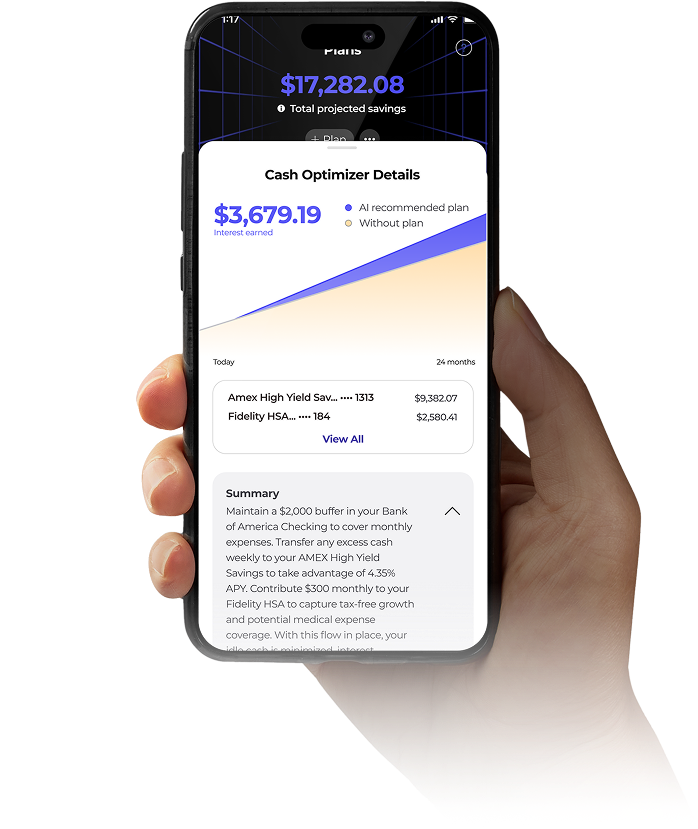
Any bank, any account, Piere makes it possible. In seconds, Piere analyzes your spending, income, wants, and goals, then creates fully automated plans for your money to follow.
- Save money automatically when you get paid — your money moves itself to the right account at the right interest rate
- Repay debt and stay debt free - Piere smartly determines which accounts to pay and when for the biggest impact
- Spend smarter — Piere keeps only the money you need for monthly expenses in your checking, moving the rest to high-yield accounts for safekeeping (and less temptation)
Get started in just seconds, and if you don't grow by at least $120 in your first year, we’ll give you back the difference.
Learn More
The future belongs to disciplined, not casual, AI-native systems
As AI reduces the cost of generating software, the differentiator shifts from production speed to system control. The most successful systems will not be the ones that generate the most code, but the ones that maintain correctness while continuously regenerating parts of themselves.
This introduces a new engineering reality: value depends on durability, not volume. Systems must behave predictably even while their internal structure changes frequently. Users expect stability, even when implementation is fluid.
That expectation cannot be met through generation alone. It requires engineering discipline layered on top of generative capability. Short feedback cycles, strong observability, and explicit behavioral contracts become essential infrastructure.
The goal is not to slow down generation. The goal is to make rapid change safe.
AI does not remove engineering constraints. It surfaces them more clearly. Systems still need reliability, consistency, and predictable behavior. Those requirements do not disappear—they become more visible under higher change velocity.
The result is a return to fundamentals: disciplined engineering is what allows rapid systems to remain trustworthy.
Tip: Prioritize short feedback loops between generation, testing, and production behavior to maintain stability under rapid change.
What’s your next spark? A new platform engineering skill? A bold pitch? A team ready to rise? Share your ideas or challenges at Tiny Big Spark. Let’s build your pyramid—together.
That’s it!
Keep innovating and stay inspired!
If you think your colleagues and friends would find this content valuable, we’d love it if you shared our newsletter with them!
PROMO CONTENT
Can email newsletters make money?
As the world becomes increasingly digital, this question will be on the minds of millions of people seeking new income streams in 2026.
The answer is—Absolutely!

That’s it for this episode!
Thank you for taking the time to read today’s email! Your support allows me to send out this newsletter for free every day.
What do you think for today’s episode? Please provide your feedback in the poll below.
How would you rate today's newsletter?
Share the newsletter with your friends and colleagues if you find it valuable.
Disclaimer: The "Tiny Big Spark" newsletter is for informational and educational purposes only, not a substitute for professional advice, including financial, legal, medical, or technical. We strive for accuracy but make no guarantees about the completeness or reliability of the information provided. Any reliance on this information is at your own risk. The views expressed are those of the authors and do not reflect any organization's official position. This newsletter may link to external sites we don't control; we do not endorse their content. We are not liable for any losses or damages from using this information.