In partnership with

The Long Game Advantage: How Compensation Really Compounds When Skill Outruns Status
For someone moving through fast-changing work environments, compensation often feels like a set of isolated decisions: pick the higher offer, negotiate the better title, aim for the next promotion as quickly as possible.
But compensation rarely behaves like a checklist. It behaves more like a compounding system where timing, skill depth, and perceived rarity interact in uneven ways.
What looks like “pay progression” on the surface is actually a long arc shaped far more by mid-stage performance than early-stage decisions. And that shift changes how early career choices should be interpreted entirely.
Attio is the AI CRM for high-growth teams.

Connect your email, calls, product data and more, and Attio instantly builds your CRM with enriched data and complete context. Whether you’re running product-led growth or enterprise sales, Attio adapts to your unique GTM motion.
Then Ask Attio to plan your next move.
Run deep web research on prospects. Update your pipeline as you work. Find customers and draft outreach emails. Powered by Universal Context, Attio's intelligence layer, Attio searches, updates, and creates across your data to accelerate your workflow.
Ask more from your CRM.
Why Early Compensation Misleads So Many Decisions
Early compensation creates a strong psychological anchor. The first salary or role offer feels like a signal of long-term trajectory, but in reality, it often represents something much narrower: how much uncertainty the market has about an individual at that moment.
At early stages, evaluation is based on potential signals rather than proven output. That means compensation reflects confidence ranges, not long-term ceiling.
A key distortion appears here: early compensation differences feel meaningful, but they are often small compared to how earnings evolve later when performance becomes measurable and specialized.
What if your money could drive itself to your goals?
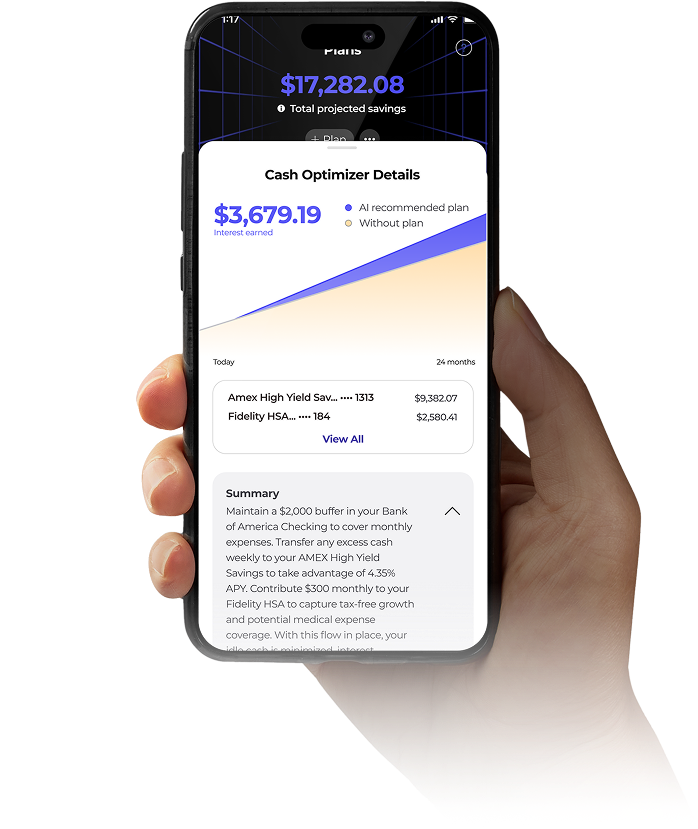
Any bank, any account, Piere makes it possible. In seconds, Piere analyzes your spending, income, wants, and goals, then creates fully automated plans for your money to follow.
- Save money automatically when you get paid — your money moves itself to the right account at the right interest rate
- Repay debt and stay debt free - Piere smartly determines which accounts to pay and when for the biggest impact
- Spend smarter — Piere keeps only the money you need for monthly expenses in your checking, moving the rest to high-yield accounts for safekeeping (and less temptation)
Get started in just seconds, and if you don't grow by at least $120 in your first year, we’ll give you back the difference.
Learn More
The result is a predictable pattern: over-optimization of early offers while under-investment in long-term skill positioning.
A more accurate framing is this: early compensation is not the main event. It is a temporary pricing of uncertainty.
Tip: When comparing early opportunities, prioritize environments that accelerate skill growth rather than marginal differences in starting compensation because early signals matter less than later compounding ability.
The Mid-Career Shift Where Compensation Stops Being Linear
The most significant shift in compensation happens when performance history becomes visible enough to differentiate individuals meaningfully.
At that stage, compensation stops behaving like a steady slope and starts behaving like a step function.
This is where mid-career dynamics dominate long-term outcomes. Performance becomes easier to evaluate, and organizations begin differentiating more aggressively between individuals who are merely competent and those who are consistently outperforming expectations.
A critical misconception is that compensation grows steadily over time. In reality, it often remains flat for stretches and then jumps sharply when a role change or level change aligns with strong performance signals.
These jumps are not random. They reflect changes in how the market values reduced uncertainty around capability.
Mid-career roles also introduce stronger selection pressure. The pool narrows, and the difference between “good” and “rarely strong” becomes more economically significant.
Tip: Treat mid-career development as the main optimization target; early roles are inputs into that stage, not endpoints worth maximizing in isolation.
Your support queue gets a head start every morning.

Viktor reads overnight tickets, tags them by product area, summarizes the patterns, and posts a brief in #support. The agent picks up the queue already triaged. The PM sees recurring requests rolled up by Friday.

Why Promotions Don’t Always Define Earnings Trajectory
Promotions are often treated as the primary driver of compensation growth, but they are better understood as timing events within a broader performance system.
Two people can reach the same level and still end up with very different compensation outcomes depending on how consistently they exceeded expectations before and after promotion.
One pattern that emerges across organizations is overlap between compensation bands. This means:
A strong performer at a lower level can out-earn a weak performer at a higher level
Performance consistency often matters more than rapid advancement
Rewards are frequently tied to demonstrated excellence, not just title changes
This creates a less intuitive outcome: steady overperformance can outperform rapid promotion followed by average execution.
There is also a compounding effect through opportunity allocation. Individuals who consistently exceed expectations tend to receive higher-quality assignments, which further increase visibility and future compensation growth potential.
Promotion timing therefore becomes secondary to performance trajectory quality.
Tip: Instead of optimizing for the fastest promotion, optimize for consistent performance that exceeds expectations at the current level because that pattern tends to unlock higher-value opportunities later.
Why Compensation Growth Behaves Like Compounding, Not a Salary Ladder
A common mental model treats compensation as linear: steady increases year over year. In practice, it behaves more like compounding with irregular jumps.
This happens for three structural reasons:
First, percentage-based increases stack on top of a growing base, which naturally accelerates growth over time.
Second, level transitions often introduce discontinuities where compensation bands expand significantly due to market scarcity at higher responsibility tiers.
Third, organizations allocate rewards unevenly based on performance differentiation rather than uniform distribution.
As a result, compensation curves tend to look flat for periods, then sharply upward during transitions or re-evaluations of capability.
This explains why early-career earnings can feel disconnected from long-term outcomes. The system is not designed to reward early acceleration as much as sustained differentiation over time.
The key driver underneath all of this is skill rarity. Compensation is less about time served and more about how uncommon a skill set becomes at higher levels of responsibility.
Tip: Focus less on incremental raises and more on building skills that become rare at higher levels of responsibility because rarity drives compounding more than tenure does.
Three months running. No losses on the open book in 2026 so far.
Adam Mesh has six open options trades on the book right now.
Every one of them is in the green.
Here's his 2026 record as of today:
• SNDA — opened Feb 26. +203. Still open.
• OWL — opened March 5. +735. Still open.
• BB — opened April 21. +474. Still open.
• ASPI — opened April 23. +800. Still open.
• NOK — opened April 30. +480. Still open.
• BULL — opened May 14. +156. Still open.
Total unrealized profit across the book: $2,848 and counting.
That's not a back-tested track record. Those are live open positions, dated and verifiable.
He'll be the first to tell you not every trade wins. He's been doing this for 30 years. He's had plenty of losers. Every trader has.
But the math behind his core strategy is built so the odds lean in his favor before he ever clicks submit.
He just put together a free video that walks through the four strategies behind every name on that list.
You'll see the trade structure. The setups. The exit rules. The reasons most options traders blow up their accounts and how to not be one of them.
Watch the free options video breakdown - drop your email to start →
The Real Strategy: Skill Depth Over Short-Term Optimization
The most consistent pattern across long-term compensation outcomes is that skill depth outweighs early optimization strategies.
Individuals who prioritize learning environments that stretch their capabilities tend to experience stronger long-term trajectories than those who focus primarily on maximizing early compensation differences.
This creates a delayed payoff structure:
Early stage: skill building with uncertain returns
Mid-stage: performance differentiation becomes visible
Later stage: compensation reflects accumulated rarity and execution quality
The key insight is that compensation is an outcome variable, not a direct optimization target.
Short-term decisions matter less than long-term capability accumulation. Organizations reward individuals who reliably handle more complex problems, not those who simply optimize for early positioning.
This also explains why performance consistency at a given level often leads to stronger outcomes than rapid advancement without mastery. Strong execution builds trust, and trust unlocks higher-quality work, which compounds into higher compensation ceilings.
The system rewards depth, not speed.
Tip: Choose roles and challenges that increase complexity tolerance and problem-solving depth because long-term compensation tracks capability growth more closely than early career optimization decisions.
What’s your next spark? A new platform engineering skill? A bold pitch? A team ready to rise? Share your ideas or challenges at Tiny Big Spark. Let’s build your pyramid—together.
That’s it!
Keep innovating and stay inspired!
If you think your colleagues and friends would find this content valuable, we’d love it if you shared our newsletter with them!
PROMO CONTENT
Can email newsletters make money?
As the world becomes increasingly digital, this question will be on the minds of millions of people seeking new income streams in 2026.
The answer is—Absolutely!

That’s it for this episode!
Thank you for taking the time to read today’s email! Your support allows me to send out this newsletter for free every day.
What do you think for today’s episode? Please provide your feedback in the poll below.
How would you rate today's newsletter?
Share the newsletter with your friends and colleagues if you find it valuable.
Disclaimer: The "Tiny Big Spark" newsletter is for informational and educational purposes only, not a substitute for professional advice, including financial, legal, medical, or technical. We strive for accuracy but make no guarantees about the completeness or reliability of the information provided. Any reliance on this information is at your own risk. The views expressed are those of the authors and do not reflect any organization's official position. This newsletter may link to external sites we don't control; we do not endorse their content. We are not liable for any losses or damages from using this information.