In partnership with

The Interface of Influence
The Real Problem Isn’t AI, Teams, or Talent… It’s the Interface Between Them
Most breakdowns in modern work don’t come from lack of intelligence. They come from friction in how intelligence is accessed, expressed, and acted on. Whether it is AI systems, team coordination, or leadership communication, the bottleneck is rarely capability. It is an interface design.
That idea cuts across everything here: how people interpret constraints, how managers shape influence, and how clarity gets lost in communication. The same pattern repeats in different forms—too many options, unclear signals, or poorly structured interaction layers.
Explore Degree Programs Tailored to You

At Education Directory, we understand that choosing the right degree program is a crucial step toward your future success. Our platform offers personalized assistance to help you discover programs that match your interests and career objectives.
How it works:
Step 1: Explore Areas of Study
Expand your skills or start something new, discover colleges by subject areas that matter to you.
Step 2: Refine Your Search
Narrow down your college search based on your desired interests
Step 3: Compare Institutions
Compare top schools and decide which institutions best fit your need
Get Started
This is an offer for educational opportunities and not an offer for nor a guarantee of employment. Students should consult with a representative from the school they select to learn more about career opportunities in that field. Program outcomes vary according to each institution’s specific program curriculum.
Work today often feels overwhelming, not because problems are unsolvable, but because everything arrives unfiltered, unstructured, and cognitively heavy. When signals are noisy, even strong decisions weaken.
The shift happening now is subtle but important: performance is increasingly determined by how well complexity is shaped before it reaches the human mind.
Tip: Design before execution; structure what people see and decide before asking them to act on it.
When Everything Is Possible, Nothing Gets Done
A common failure in systems—whether teams or tools—is assuming that more choice equals more control. In practice, excessive options reduce decision quality. Cognitive overload increases hesitation, and hesitation looks like disengagement.
This shows up in different environments:
Too many metrics dilute signal clarity.
Too many directions fragment team focus.
Too many communication threads blur decision ownership.
When everything is measured, nothing feels meaningful. When everything is allowed, nothing feels guided. The human brain does not scale well with unbounded choice; it defaults to delay or avoidance.
The solution is not restriction for its own sake, but intentional reduction of noise. High-performing environments often look constrained from the outside, but internally they are optimized for focus.
Constraints are not the enemy of performance—they are what make performance interpretable.
Tip: Reduce decision surface area; fewer inputs lead to higher-quality outputs.
AI Agents Are Reading Your Docs. Are You Ready?

Last month, 48% of visitors to documentation sites across Mintlify were AI agents, not humans.
Claude Code, Cursor, and other coding agents are becoming the actual customers reading your docs. And they read everything.
This changes what good documentation means. Humans skim and forgive gaps. Agents methodically check every endpoint, read every guide, and compare you against alternatives with zero fatigue.
Your docs aren't just helping users anymore. They're your product's first interview with the machines deciding whether to recommend you.
That means: clear schema markup so agents can parse your content, real benchmarks instead of marketing fluff, open endpoints agents can actually test, and honest comparisons that emphasize strengths without hype.
Mintlify powers documentation for over 20,000 companies, reaching 100M+ people every year. We just raised a $45M Series B led by @a16z and @SalesforceVC to build the knowledge layer for the agent era.
Influence Is Not Earned Through Effort, But Through Alignment
Influence inside a group does not come from doing more work or taking on invisible burdens. It comes from shaping direction and behavior through consistency.
Many attempts at influence fail because they rely on action without alignment. Fixing isolated problems does not shift team behavior if the underlying system remains unchanged. Teams respond less to sacrifice and more to patterns they can recognize and repeat.
Influence strengthens when three elements are present:
Visible consistency in behavior
Reinforced signals of what “good” looks like
Shared understanding of direction
Without these, effort becomes invisible labor rather than directional force. Even well-intentioned actions can feel disconnected if they do not change how others operate.
True influence compounds quietly. It is not about being central to everything—it is about making the system easier to navigate.
Tip: Reinforce behavior publicly; what gets highlighted gets repeated.

Communication Fails When It Ignores the Listener’s Reality
Directness is often misunderstood as saying everything plainly without filtering. That approach misses the core function of communication: ensuring understanding, not just expression.
Effective communication begins with mapping the other side’s reality:
What assumptions are already in place?
What emotional weight is attached to the topic?
What entry point will keep the conversation open rather than defensive?
The same message can produce opposite outcomes depending on framing. A poorly timed truth can shut down discussion. A well-framed truth can unlock agreement faster than expected.
This is not about softening reality. It is about sequencing it so it can be received. The goal is not persuasion through pressure, but clarity through structure.
In practice, the most effective communicators are not the loudest or bluntest. They are the ones who reduce resistance before it forms.
Tip: Start from the other person’s mental model; alignment precedes agreement.
Unlock Your Next Income Stream: 100 Side Hustles for Ambitious Founders
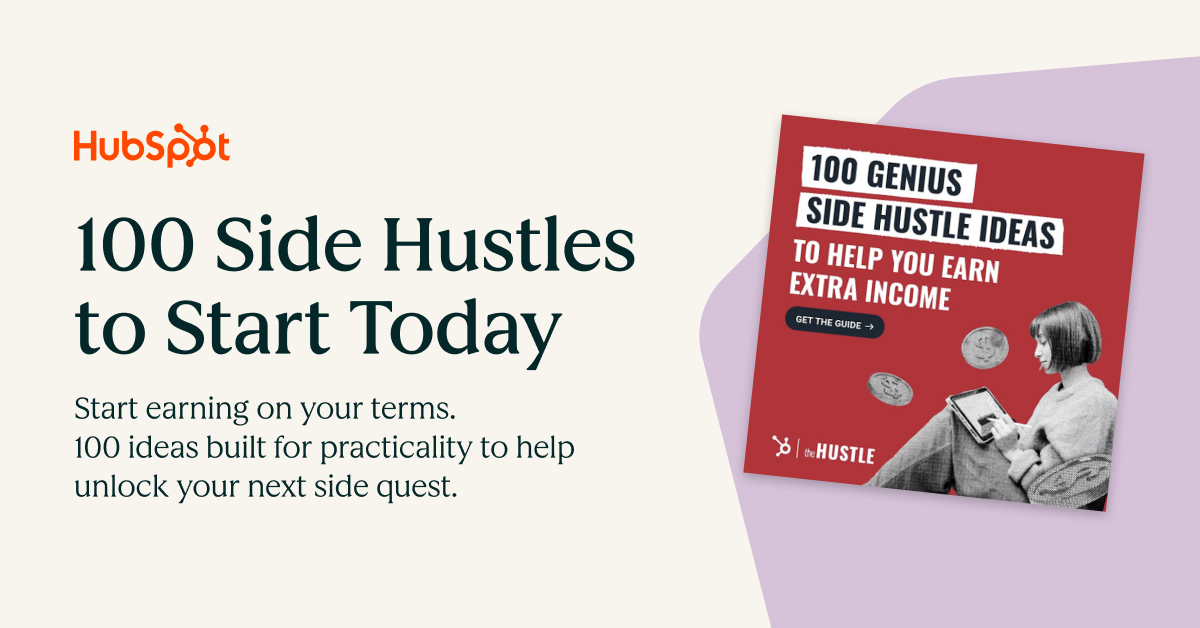
In a world where financial freedom feels like a distant dream, smart women are building wealth on their own terms.
• Finally, a curated database of 100 proven side hustles (that actually work)
• Each idea comes with required startup costs, time investment, and potential earnings
• Exclusive insights from founders who've turned side gigs into 6-figure empires
• Detailed skill requirements so you can match your talents to the right opportunity
• Bonus: Priority scoring system to identify which hustles align with your lifestyle
Don't let another month slip by watching others build their empire. Your next income stream is hiding in our database, waiting to be discovered.
👉 Download the Side Hustle Database Now
The Hidden System: How Work Actually Becomes Understandable
Across teams, tools, and communication styles, one principle keeps reappearing: systems work better when complexity is translated into usable structure.
In AI interfaces, overload happens when outputs are too unstructured to act on. In teams, overload happens when responsibilities and constraints are unclear. In communication, overload happens when context is missing, and interpretation is left entirely to the receiver.
The most effective environments do not eliminate complexity. They reshape it:
AI systems become more useful when they generate structured outputs instead of raw text dumps.
Teams perform better when constraints reduce ambiguity rather than limit creativity.
Conversations work better when context is layered instead of delivered all at once.
What changes performance is not raw capability, but the shape in which capability is delivered.
As systems improve, the advantage shifts toward those who can design better interfaces between people, information, and decisions. The future is not about more intelligence. It is about better translation of intelligence into action.
Tip: Treat every output as an interface; clarity determines usability more than content.
What’s your next spark? A new platform engineering skill? A bold pitch? A team ready to rise? Share your ideas or challenges at Tiny Big Spark. Let’s build your pyramid—together.
That’s it!
Keep innovating and stay inspired!
If you think your colleagues and friends would find this content valuable, we’d love it if you shared our newsletter with them!
PROMO CONTENT
Can email newsletters make money?
As the world becomes increasingly digital, this question will be on the minds of millions of people seeking new income streams in 2026.
The answer is—Absolutely!

That’s it for this episode!
Thank you for taking the time to read today’s email! Your support allows me to send out this newsletter for free every day.
What do you think for today’s episode? Please provide your feedback in the poll below.
How would you rate today's newsletter?
Share the newsletter with your friends and colleagues if you find it valuable.
Disclaimer: The "Tiny Big Spark" newsletter is for informational and educational purposes only, not a substitute for professional advice, including financial, legal, medical, or technical. We strive for accuracy but make no guarantees about the completeness or reliability of the information provided. Any reliance on this information is at your own risk. The views expressed are those of the authors and do not reflect any organization's official position. This newsletter may link to external sites we don't control; we do not endorse their content. We are not liable for any losses or damages from using this information.