Sponsored by

Fragile Empires, Real Systems: Why Sustainable Teams Outlast Short-Term Wins
Inside many organizations, growth often looks like success: expanding headcount, rising scope, faster execution cycles, and increasingly visible “momentum.” Yet beneath that surface, a quieter pattern emerges. Teams begin to feel stretched, decisions become reactive, and delivery slows despite increased effort.
A recurring leadership trap appears when individuals are treated as interchangeable units of output. In this model, urgency becomes the primary management tool. Workloads are increased, coordination tightens, and short-term output improves. On dashboards, this can resemble progress. In practice, it often signals structural strain rather than system health.
The AI assistant for admin tasks

Scheduling meetings isn't why you get out of bed. Filing expenses isn't your calling. So hand it all to Catch — the AI admin that takes the tedious work off your plate and gets it done.
Just ask. Catch handles the back-and-forth on scheduling, flights, restaurants, follow-ups, vendors, clients and more — then comes back with it sorted, in moments.
No guesswork. No dropped balls. What's yours stays yours, private by default and reliable by design.
Nobody became a leader to book their own flights. Meet your admin savior and go from swamped to sorted.
Get started free at catchagent.ai — and start spending your time on the things only you can do.
The underlying issue is not effort but design. When systems are overloaded, performance gains come from human overextension rather than improved flow. That creates a temporary lift followed by fatigue, inconsistency, and dependency on heroic effort to maintain baseline delivery.
A healthier framing treats organizations as systems of interacting constraints rather than collections of individuals. Work capacity, queue size, and technical complexity all interact through feedback loops. When work enters faster than it exits, backlog grows, prioritization becomes reactive, and execution slows regardless of individual talent.
The most durable organizations reduce strain by improving flow rather than increasing pressure.
Tip: Identify where urgency replaces structure; if “faster execution” depends on people consistently working harder rather than work flowing better, the system itself needs redesign, not escalation.
Costco’s Best-Kept Secrets: 10 Weird Tricks Only Superfans Know
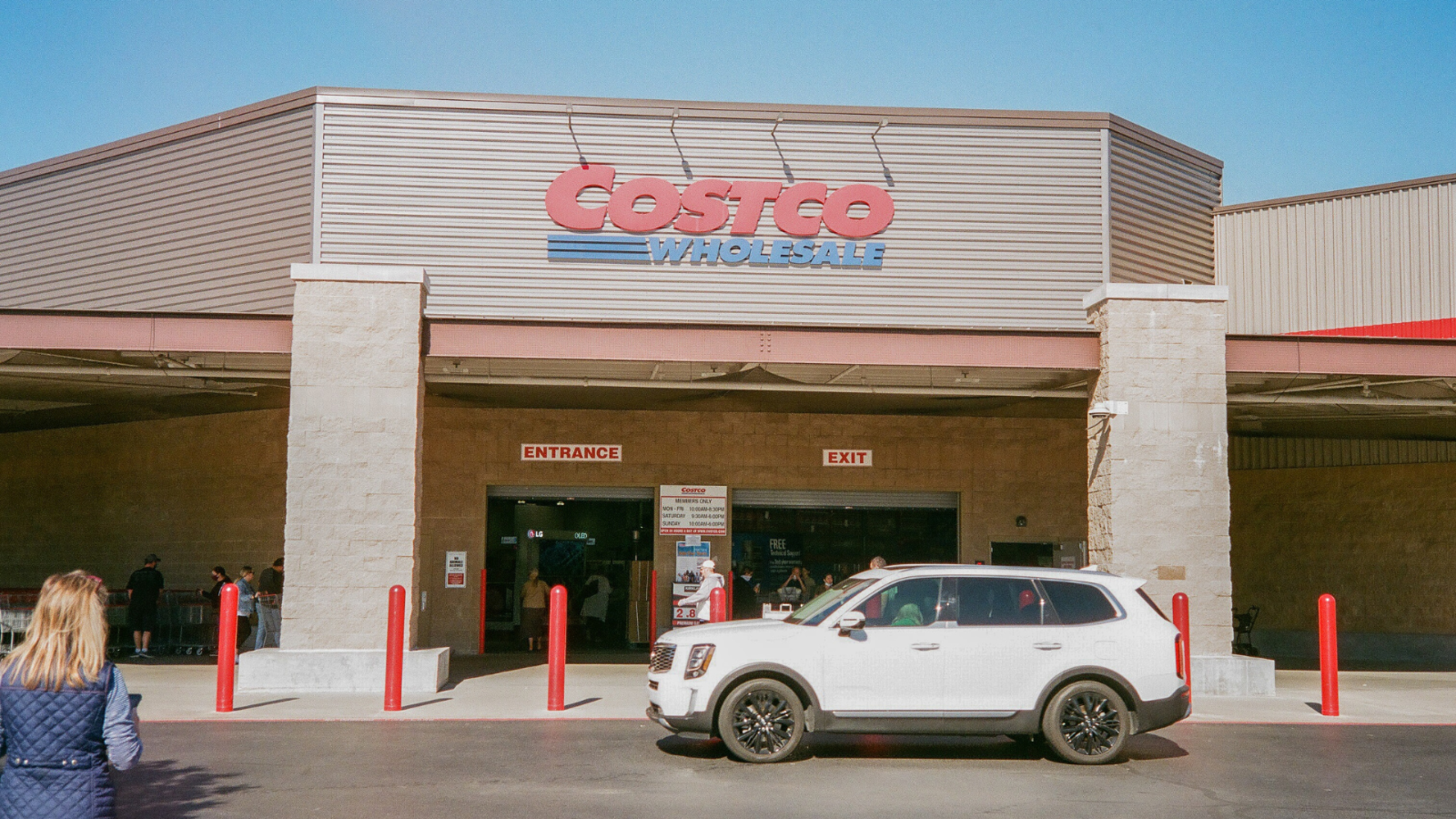
Do you shop at Costco? Then you know the thrill of saving money. But you might be missing other smart ways to stretch your dollars. Check out our list of genius money hacks—almost as good as that $1.50 hot dog!
Learn More
Why “Pushing Harder” Feels Effective but Fails Over Time
When teams fall behind, the instinctive response is to increase intensity. More coordination meetings, tighter deadlines, and overlapping responsibilities often follow. These interventions produce visible activity, which can be mistaken for recovery.
However, increasing pressure rarely addresses the underlying constraint. It shifts responsibility from system design to human endurance. Over time, this produces an uneven distribution of work: a few individuals absorb critical tasks while others become underutilized or disengaged. This imbalance reduces resilience and increases dependency on a small group of high performers.
In parallel, leadership expansion can unintentionally replicate the same pattern at a larger scale. As scope grows, some leaders accumulate responsibilities as a signal of importance. Headcount becomes symbolic, and complexity becomes a marker of influence. Yet when scope expands beyond manageable coordination limits, decision quality declines and execution becomes harder to sustain.
Organizational structure behaves predictably under load. As systems scale, coordination costs rise faster than output unless the structure is intentionally redesigned. This is why increasing size without improving flow leads to diminishing returns.
The fundamental mistake is assuming performance problems are motivation problems. In most cases, they are system problems expressed through people.
Tip: When a team struggles, examine workload distribution and work-in-progress limits before increasing urgency; overload hides inefficiencies that only become visible when pressure is reduced.
Your employees are connecting AI to everything. Now what?

ChatGPT and Claude aren't just answering questions. Employees are connecting them directly to Notion, Linear, Jira, and the rest of your stack — with no security visibility into what data moves or what actions they take.
Harmonic Security gives your team the visibility to control it.

The Structural Limits That Define Team Performance
Every system has constraints that cannot be negotiated through effort alone. One of the most important is cognitive bandwidth. As the number of direct working relationships increases, coordination overhead rises non-linearly. A small team can operate fluidly; a larger one requires significantly more synchronization effort just to maintain basic alignment.
This creates a threshold effect. Beyond a certain size, adding more people does not proportionally increase output. Instead, it increases communication complexity. The system begins to spend more energy coordinating work than completing it.
Other constraints include onboarding time, decision latency, and dependency management. New contributors typically require months before contributing at full capacity. During that period, existing members absorb additional load, temporarily reducing system efficiency. If expansion happens during a crisis, recovery lags behind expectations.
Team stability also matters. When groups are frequently reshuffled, informal coordination structures—trust, judgment patterns, and tacit knowledge—are reset. These invisible systems are often what enable high performance. Disrupting them for structural appearance often reduces actual capability.
Sustainable systems respect these constraints rather than attempting to override them. When growth is necessary, scaling through multiple stable units tends to outperform expanding single units indefinitely.
Tip: Preserve intact working groups whenever possible; moving work between stable teams preserves coordination efficiency better than frequently redistributing individuals.
Understanding System States: Underwater, Stable, and Productive
Organizations tend to operate in one of three states, each requiring a different response.
When a system is underwater, incoming work consistently exceeds delivery capacity. Backlogs expand, prioritization becomes reactive, and morale declines. Adding temporary effort at this stage rarely solves the problem because onboarding and stabilization lag behind demand. The only durable correction is reducing load or increasing capacity early enough to allow recovery before compounding delays accumulate.
When a system is treading water, throughput matches incoming demand but leaves no space for improvement. Teams remain stable but stagnant. In this state, multitasking often becomes the default behavior, reducing efficiency further. The most effective correction is limiting concurrent work, allowing completion cycles to finish fully before new commitments are added. This restores flow and gradually reduces accumulated friction.
When a system is above water, surplus capacity exists. This is the most fragile state. External pressure tends to fill available bandwidth immediately, preventing investment in long-term improvements. Without protection, this state collapses back into equilibrium under load. The key is deliberately preserving slack to maintain resilience and enable structural improvements.
Each state is transitional. Without conscious management, systems naturally drift toward overload because demand expands to fill available capacity.
Tip: Protect unallocated time as a system resource; unused capacity is not inefficiency but the foundation for long-term stability and adaptation.
These Side Hustles Are Best For Older Workers Struggling On Just Social Security

Your 50s+ are a great time to build wealth. Beyond basics like bulk shopping and retirement accounts, here are some fresh ways to grow your money you might’ve missed
Learn More
Building Systems That Outlast Pressure
Sustainable organizations are defined less by intensity and more by design discipline. Strong systems do not rely on individuals absorbing dysfunction. Instead, they distribute work in ways that reduce dependency on exceptional effort.
Several principles consistently emerge in resilient structures.
First, consistency in process matters more than improvisation. When expectations are stable, individuals spend less energy interpreting context and more energy executing work. Fairness and predictability reduce friction across teams.
Second, measurement must reflect real outcomes rather than easily counted proxies. Systems that optimize for simplistic metrics often distort behavior, producing output that appears successful while degrading actual quality.
Third, scalability requires foresight. Structures that function at small scale often fail abruptly when growth thresholds are crossed. Designing for anticipated scale prevents repeated reorganizations that erode stability.
Fourth, knowledge must be externalized. When critical understanding exists only within individuals, the system becomes fragile. Documentation and shared context reduce dependency on specific people and improve continuity under change.
Finally, durable systems prioritize completion over initiation. Partial execution creates hidden long-term costs, including duplicated systems, unresolved transitions, and fragmented ownership.
The core idea remains consistent: strong systems minimize the need for human compensation. They allow people to contribute without becoming buffers for structural weakness.
The difference between fragile and durable organizations is not ambition or intelligence. It is whether the system depends on people burning out to function.
Tip: Prioritize finishing existing work over starting new initiatives; incomplete systems accumulate long-term drag that reduces overall organizational speed.
What’s your next spark? A new platform engineering skill? A bold pitch? A team ready to rise? Share your ideas or challenges at Tiny Big Spark. Let’s build your pyramid—together.
That’s it!
Keep innovating and stay inspired!
If you think your colleagues and friends would find this content valuable, we’d love it if you shared our newsletter with them!
PROMO CONTENT
Can email newsletters make money?
As the world becomes increasingly digital, this question will be on the minds of millions of people seeking new income streams in 2026.
The answer is—Absolutely!

That’s it for this episode!
Thank you for taking the time to read today’s email! Your support allows me to send out this newsletter for free every day.
What do you think for today’s episode? Please provide your feedback in the poll below.
How would you rate today's newsletter?
Share the newsletter with your friends and colleagues if you find it valuable.
Disclaimer: The "Tiny Big Spark" newsletter is for informational and educational purposes only, not a substitute for professional advice, including financial, legal, medical, or technical. We strive for accuracy but make no guarantees about the completeness or reliability of the information provided. Any reliance on this information is at your own risk. The views expressed are those of the authors and do not reflect any organization's official position. This newsletter may link to external sites we don't control; we do not endorse their content. We are not liable for any losses or damages from using this information.