In partnership with

When AI Starts Acting Like Infrastructure: The New Discipline of Observing Intelligent Systems
AI systems no longer behave like traditional applications. They generate responses, trigger tools, call external APIs, and make multi-step decisions across distributed environments. This shift turns them from predictable software into dynamic systems whose internal behavior is partially probabilistic and continuously changing.
Traditional observability—metrics, logs, traces, and profiles—was designed for deterministic systems. CPU usage, latency, and error rates still matter, but they no longer describe what is actually happening inside AI-driven workflows. An agent can appear healthy from an infrastructure perspective while silently producing low-quality outputs, hallucinating information, or drifting in behavior over time.
Granola Runs Revenue On Attio

"When I think of revenue, I think of Attio." - Shreman Shrestha, Head of Business at Granola
Here's what that adds up to:
Zero missed leads and 10x faster access to customer context
Lead triage 83% faster
Five hours saved per week with automated updates
This creates a gap between system health and system intelligence. Closing that gap requires treating AI interactions—conversations, sessions, tool calls, and token flows—as first-class observability signals rather than secondary logs.
As AI adoption expands across production systems, observability becomes less about detecting outages and more about understanding behavior, cost, and trustworthiness in real time.
Tip: If infrastructure metrics look healthy but user outcomes degrade, prioritize AI-level signals (responses, tool calls, and evaluations) over system-level metrics alone.
What if your money could drive itself to your goals?
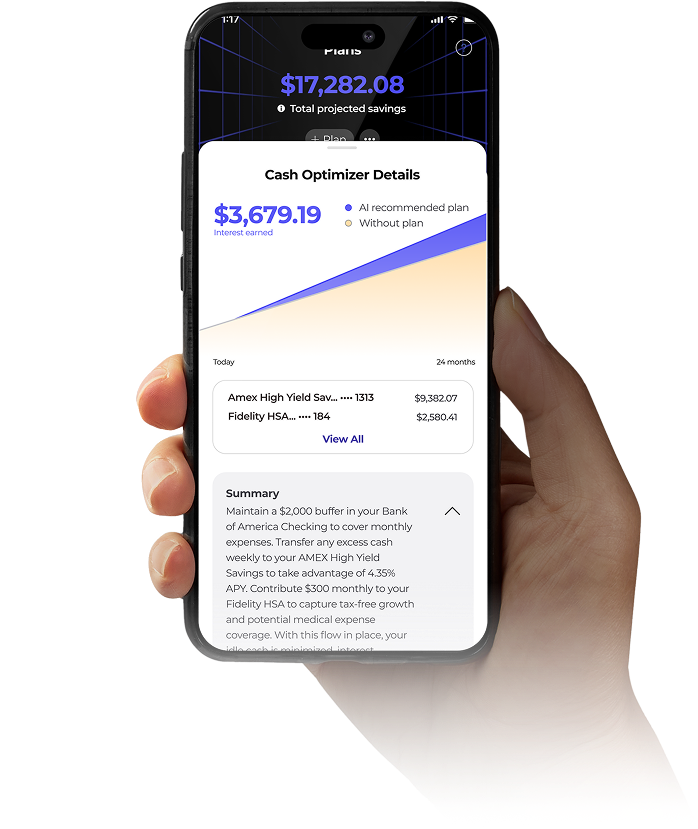
Any bank, any account, Piere makes it possible. In seconds, Piere analyzes your spending, income, wants, and goals, then creates fully automated plans for your money to follow.
- Save money automatically when you get paid — your money moves itself to the right account at the right interest rate
- Repay debt and stay debt free - Piere smartly determines which accounts to pay and when for the biggest impact
- Spend smarter — Piere keeps only the money you need for monthly expenses in your checking, moving the rest to high-yield accounts for safekeeping (and less temptation)
Get started in just seconds, and if you don't grow by at least $120 in your first year, we’ll give you back the difference.
Learn More
Why AI Breaks Traditional Observability Models
Cloud-native observability already operates under extreme complexity: high request volumes, distributed architectures, and exploding cardinality. AI workloads inherit all of this—and add entirely new dimensions.
These include:
Model behavior variability, where outputs can drift without code changes
Token economics, where every interaction carries direct financial cost
GPU constraints, including saturation, queuing, and utilization bottlenecks
Multi-step reasoning chains, such as RAG pipelines and agent workflows
Safety risks, including hallucinations, bias, and unintended content generation
Unlike traditional systems, failures in AI systems are often non-binary. Nothing crashes. Instead, performance degrades gradually: responses become less accurate, slower, or more expensive without obvious alerts.
This creates a new operational reality for SREs and platform teams. They are no longer only responsible for uptime, but also for output quality, cost efficiency, and behavioral stability.
The key observability challenge becomes prioritization: identifying which signals actually matter and filtering out noise without losing critical insight.
Tip: Focus observability budgets on high-value signals such as token usage per outcome, response quality scores, and latency distribution—not raw telemetry volume.
Put Your Predictions to Work

Trade on real-world events you already follow, from elections and inflation to sports, tech, and more. Choose “Yes” or “No” based on what you think will happen and see how your prediction plays out.
Pick your market and start trading what’s next.
Bonus credit varies from $15 to $500. Terms apply.

Observability Must Now Understand Behavior, Not Just Systems
Modern AI workloads require visibility into three layers simultaneously:
Infrastructure layer — GPUs, compute, storage, and networking
Model layer — latency, throughput, and inference performance
Behavior layer — correctness, hallucinations, safety, and usefulness
The behavior layer is the most important and the least understood. It determines whether an AI system is actually delivering value.
To manage this complexity, observability platforms increasingly treat AI interactions as structured data:
Conversations and prompts become traceable sessions
Tool usage becomes part of execution graphs
Token consumption maps directly to cost attribution
Model outputs are continuously evaluated using automated scoring systems
This approach transforms AI monitoring from passive observation into active evaluation. Instead of reacting after users report issues, systems can flag degraded behavior early through anomaly detection or evaluation thresholds.
Open standards like OpenTelemetry and specialized instrumentation layers help unify these signals, making them queryable alongside traditional infrastructure data.
Tip: Instrument AI systems at the interaction level (sessions and tool calls), not just the API level, to capture behavioral context that infrastructure metrics cannot provide.
AI Observability as a Unified Control System
A modern AI observability stack functions as a control plane for intelligent workloads. It connects raw telemetry with cost, performance, and behavioral evaluation in a single system.
In practice, this means:
Each agent interaction is traceable end-to-end
Tool calls are mapped to execution flows
Token usage is tied to both cost and output quality
Model versions are tracked alongside performance changes
Alerts trigger not only on failures, but on degraded quality or unsafe outputs
This unified view allows teams to debug issues that were previously invisible. For example, a system may not fail technically but may quietly increase response time, increase token usage, and reduce user satisfaction simultaneously.
AI observability systems also enable comparative analysis across models, prompts, and configurations. This helps identify which combinations produce the best balance of cost, speed, and quality.
Another important capability is automated evaluation. Techniques such as LLM-as-a-judge allow systems to continuously score outputs against defined criteria. These evaluations can be integrated into alerting pipelines, ensuring behavioral issues are detected as early as infrastructure failures.
Tip: Treat model versions, prompts, and tool configurations as deployable artifacts; track them like software releases to isolate performance and behavior changes.
Thinking about Reddit ads? Get $500 in free credit when you spend $500 and expert 1:1 guidance

500M+ people use Reddit every month. By showing up where these users research and validate products, you can tap into the conversations that drive more trust and higher conversions.
And making ads is simple: with the Simple Create campaign builder, you can launch in minutes. Plus, Reddit offers free, 1:1 guidance from an ads expert to help you start and optimize your campaign.
Reach your audience on the platform they already trust.
Launch your first Reddit campaign ↗️
New accounts only, limit 1 per account, additional terms apply.
From Monitoring Systems to Understanding Intelligent Workflows
The evolution of observability in AI systems reflects a broader shift: software is no longer just executing instructions—it is reasoning, adapting, and interacting dynamically with its environment.
This creates a new requirement: understanding workflows rather than just systems.
A single AI request may involve:
Query interpretation
Retrieval across external knowledge sources
Tool execution across multiple services
Multi-step reasoning chains
Final response generation
Post-processing evaluations
Without unified observability, these steps become opaque. Debugging becomes guesswork, and cost attribution becomes unclear.
Modern AI observability platforms address this by combining traces, metrics, logs, and AI-specific signals into a single environment. This enables teams to:
Reconstruct full agent behavior from input to output
Identify where latency or cost spikes occur within workflows
Detect subtle degradations in output quality
Correlate infrastructure issues with model behavior changes
As systems scale, this visibility becomes essential not only for reliability but also for financial control and user trust.
AI observability is effectively becoming the operating layer for AI-native systems—where reliability, cost, and behavior are managed together rather than separately.
The core shift is simple but significant: observability is no longer about watching systems fail. It is about understanding why intelligent systems behave the way they do.
Tip: When diagnosing AI systems, trace full workflows end-to-end instead of isolating individual components; most failures emerge from interactions, not single points.
What’s your next spark? A new platform engineering skill? A bold pitch? A team ready to rise? Share your ideas or challenges at Tiny Big Spark. Let’s build your pyramid—together.
That’s it!
Keep innovating and stay inspired!
If you think your colleagues and friends would find this content valuable, we’d love it if you shared our newsletter with them!
PROMO CONTENT
Can email newsletters make money?
As the world becomes increasingly digital, this question will be on the minds of millions of people seeking new income streams in 2026.
The answer is—Absolutely!

That’s it for this episode!
Thank you for taking the time to read today’s email! Your support allows me to send out this newsletter for free every day.
What do you think for today’s episode? Please provide your feedback in the poll below.
How would you rate today's newsletter?
Share the newsletter with your friends and colleagues if you find it valuable.
Disclaimer: The "Tiny Big Spark" newsletter is for informational and educational purposes only, not a substitute for professional advice, including financial, legal, medical, or technical. We strive for accuracy but make no guarantees about the completeness or reliability of the information provided. Any reliance on this information is at your own risk. The views expressed are those of the authors and do not reflect any organization's official position. This newsletter may link to external sites we don't control; we do not endorse their content. We are not liable for any losses or damages from using this information.