In partnership with

The Hidden Shape of Career Earnings: Why Promotions Don’t Work the Way They Seem To
There is a quiet misunderstanding that shapes how career decisions are made: the belief that early compensation meaningfully determines long-term outcomes. It feels logical in the moment. A higher starting number seems like a better foundation. A lower offer feels like a compromise that must be corrected quickly.
But compensation systems in most large organizations do not behave like straight lines. They behave more like delayed amplification systems. Early earnings are signals, not destinations. They reflect evaluation under uncertainty, not long-term value.
At the beginning of a career, the system is still trying to answer a basic question: how fast does this person grow when placed in higher-pressure environments? Because of that uncertainty, compensation bands stay compressed. Differences between roles exist, but they are intentionally muted. Organizations avoid making large bets on unproven trajectories.
The IT strategy every team needs for 2026

2026 will redefine IT as a strategic driver of global growth. Automation, AI-driven support, unified platforms, and zero-trust security are becoming standard, especially for distributed teams. This toolkit helps IT and HR leaders assess readiness, define goals, and build a scalable, audit-ready IT strategy for the year ahead. Learn what’s changing and how to prepare.
What matters more than starting level is what the system learns over time. As capability becomes clearer, compensation begins to separate dramatically. The early phase is less about reward and more about sorting.
This is why early optimization often misfires. The number that feels most important is usually the least predictive of long-term outcome.
Tip: Focus early decisions on environments that accelerate skill exposure rather than marginal differences in starting compensation.
What if your money could drive itself to your goals?
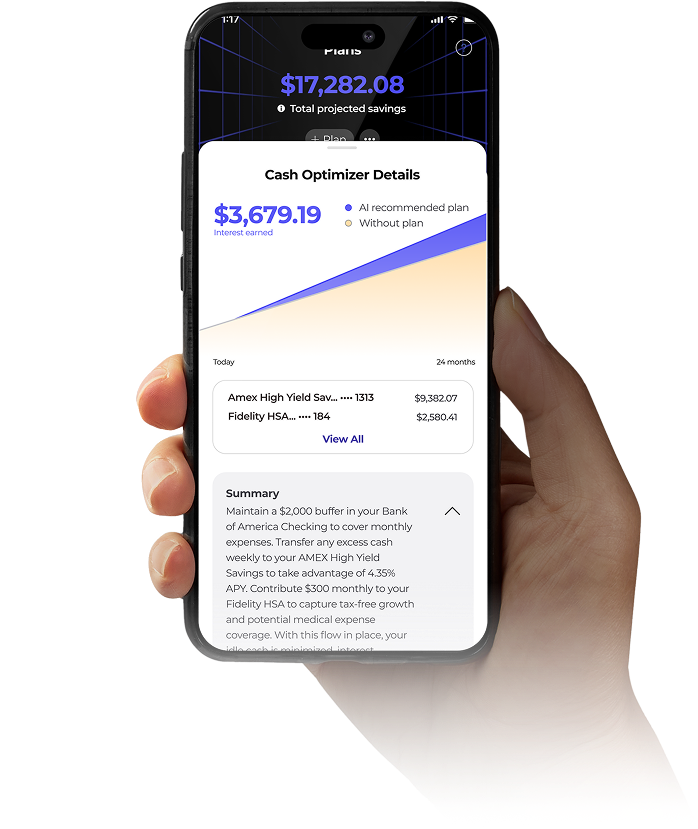
Any bank, any account, Piere makes it possible. In seconds, Piere analyzes your spending, income, wants, and goals, then creates fully automated plans for your money to follow.
- Save money automatically when you get paid — your money moves itself to the right account at the right interest rate
- Repay debt and stay debt free - Piere smartly determines which accounts to pay and when for the biggest impact
- Spend smarter — Piere keeps only the money you need for monthly expenses in your checking, moving the rest to high-yield accounts for safekeeping (and less temptation)
Get started in just seconds, and if you don't grow by at least $120 in your first year, we’ll give you back the difference.
Learn More
Why Mid-Career Becomes the Real Economic Engine
Compensation tends to concentrate later in a career, not earlier. The reason is structural. As experience accumulates, organizations shift from guessing ability to pricing proven performance under ambiguity.
Mid-career roles carry disproportionate weight because they sit at the intersection of execution, judgment, and scope. At this stage, the difference between average and exceptional performance becomes more visible, measurable, and financially meaningful.
What appears as gradual progression in early years often becomes exponential separation later. This is not because pay suddenly “jumps,” but because compensation systems begin layering multiple factors at once: scope of responsibility, rarity of skill combination, and impact consistency.
Two people with similar early trajectories can diverge significantly once their work starts influencing broader systems or higher-stakes outcomes. At that point, compensation reflects not just output, but leverage.
The key insight is that early career variability is noise; mid-career variability is signal.
Tip: Treat early roles as compounding skill investments, not as permanent anchors for earning potential.
The Overlap Problem in Compensation Bands
Compensation structures are not clean ladders. Most organizations design overlapping bands intentionally. This overlap serves two purposes: flexibility in hiring and flexibility in retention.
It allows companies to bring in strong candidates without forcing immediate promotion-level alignment. It also allows them to reward exceptional performance without changing titles.
This creates a counterintuitive reality: a high performer at a lower level can out-earn an average performer at a higher level. The system is not strictly hierarchical; it is range-based.
Because of this overlap, promotions are not the primary driver of compensation growth. Performance within a level often matters more than movement between levels. Consistent overperformance at a lower level can accumulate more financial advantage than rapid but shallow progression.
This also explains why timing promotions incorrectly can be costly. Moving up too early can reset expectations before mastery is fully established, while staying longer in a level while exceeding expectations can create stronger compounding effects.
In practice, compensation is shaped more by how far performance sits above expectations than by the label attached to a role.
Tip: Optimize for sustained overperformance within a level rather than fast progression through levels.
Attio - the AI CRM for modern businesses.

Attio is the AI CRM that keeps you ten steps ahead.
Ask Attio anything. Where should I focus? What deals are at risk? Search, update, and create across your customer data.
Ask more from CRM. Ask Attio.

Promotions as Calibration, Not Rewards
Promotions are often interpreted as rewards for past performance, but structurally they function more as recalibration points. They reset expectations, not just recognition.
Each new level comes with a new baseline. What was considered exceptional at one stage becomes expected at the next. This means rapid promotion without sustained overperformance can create a cycle of constantly “catching up” to expectations.
There is also a hidden asymmetry: individuals who are promoted only after consistently exceeding expectations tend to be assigned higher-trust work earlier in their new role. This is because credibility is already established.
Over time, this affects compensation indirectly. Better assignments lead to better visibility, which leads to stronger performance evaluations, which then influence future compensation adjustments.
Meanwhile, individuals who are promoted quickly but perform at baseline in their new level often receive fewer high-impact opportunities. The system gradually redistributes opportunity based on demonstrated reliability at scale.
Promotions therefore function less like rewards and more like reclassification of trust.
Tip: Treat promotions as readiness signals for larger responsibility, not as endpoints of achievement.
Costco’s Best-Kept Secrets: 10 Weird Tricks Only Superfans Know

Do you shop at Costco? Then you know the thrill of saving money. But you might be missing other smart ways to stretch your dollars. Check out our list of genius money hacks—almost as good as that $1.50 hot dog!
Learn More
The Long Curve: How Compensation Actually Compounds
Compensation growth is rarely linear. It tends to move in steps, separated by periods of stability. These steps are triggered by shifts in capability, not incremental improvement.
One of the most overlooked dynamics is geometric growth. Percentage-based increases applied repeatedly over time create widening gaps between early and later career compensation. Even small differences in growth rate compound significantly over decades.
Another key factor is discontinuity. Certain levels or roles unlock disproportionately larger compensation bands due to scarcity. These jumps are not smooth; they are step-changes driven by limited supply of individuals capable of operating at that level.
Because of this structure, long-term outcomes depend less on negotiating early offers and more on positioning for high-scarcity roles later in the career trajectory.
The most consistent pattern across high earners is not aggressive early optimization, but deliberate skill accumulation that increases optionality in mid-career.
This shifts the real question away from “What is the best offer now?” toward “What capabilities will create access to scarce roles later?”
The compounding effect only activates when skill growth aligns with increasing responsibility over time.
Tip: Prioritize skill paths that increase access to rare, high-leverage roles rather than maximizing short-term compensation gains.
Closing Perspective
The structure of compensation systems rewards depth, rarity, and sustained overperformance more than early positioning or rapid promotion cycles. What looks like a ladder is actually a layered system of thresholds, overlaps, and delayed amplification.
For someone navigating this system, the advantage comes from understanding how it actually behaves rather than how it appears at entry level.
What’s your next spark? A new platform engineering skill? A bold pitch? A team ready to rise? Share your ideas or challenges at Tiny Big Spark. Let’s build your pyramid—together.
That’s it!
Keep innovating and stay inspired!
If you think your colleagues and friends would find this content valuable, we’d love it if you shared our newsletter with them!
PROMO CONTENT
Can email newsletters make money?
As the world becomes increasingly digital, this question will be on the minds of millions of people seeking new income streams in 2026.
The answer is—Absolutely!

That’s it for this episode!
Thank you for taking the time to read today’s email! Your support allows me to send out this newsletter for free every day.
What do you think for today’s episode? Please provide your feedback in the poll below.
How would you rate today's newsletter?
Share the newsletter with your friends and colleagues if you find it valuable.
Disclaimer: The "Tiny Big Spark" newsletter is for informational and educational purposes only, not a substitute for professional advice, including financial, legal, medical, or technical. We strive for accuracy but make no guarantees about the completeness or reliability of the information provided. Any reliance on this information is at your own risk. The views expressed are those of the authors and do not reflect any organization's official position. This newsletter may link to external sites we don't control; we do not endorse their content. We are not liable for any losses or damages from using this information.