In partnership with

How Careers Survive Constant Reorganization and Still Compound
Reorganizations are not rare events in modern organizations. They are structural resets that occur whenever priorities shift, leadership changes, or execution models no longer match reality. Over time, they stop feeling like interruptions and start becoming part of the baseline operating environment.
In systems that ship quickly and evolve constantly, organizational charts behave less like fixed maps and more like temporary drafts. Each version reflects a working hypothesis about how teams should be arranged at that moment in time. When that hypothesis no longer fits, the structure changes again.
A large part of the difficulty comes from expectation mismatch. Many of the hardest moments during reorgs are not caused by the change itself, but by the assumption that teams, managers, and responsibilities should remain stable long enough to become identity anchors. In practice, those elements are among the most frequently updated parts of the system.
Global HR shouldn't require five tools per country

Your company going global shouldn’t mean endless headaches. Deel’s free guide shows you how to unify payroll, onboarding, and compliance across every country you operate in. No more juggling separate systems for the US, Europe, and APAC. No more Slack messages filling gaps. Just one consolidated approach that scales.
A more accurate mental model treats reorgs as infrastructure resets. Systems reboot, dependencies shift, ownership is reassigned, and execution continues on a new configuration. The surface changes, but the underlying work does not stop.
Those who adapt well to this environment tend to assume change as the default state rather than an exception. That single shift reduces friction significantly when transitions occur.
Tip: Anchor identity to skills and output rather than teams or reporting lines. Organizational structure changes faster than capability compounds.
Explore Degree Programs Tailored to You

At Education Directory, we understand that choosing the right degree program is a crucial step toward your future success. Our platform offers personalized assistance to help you discover programs that match your interests and career objectives.
How it works:
Step 1: Explore Areas of Study
Expand your skills or start something new, discover colleges by subject areas that matter to you.
Step 2: Refine Your Search
Narrow down your college search based on your desired interests
Step 3: Compare Institutions
Compare top schools and decide which institutions best fit your need
Get Started
This is an offer for educational opportunities and not an offer for nor a guarantee of employment. Students should consult with a representative from the school they select to learn more about career opportunities in that field. Program outcomes vary according to each institution’s specific program curriculum.
Why organizations keep reorganizing themselves
Reorganizations rarely originate from a single cause. They emerge from a combination of structural pressures that accumulate over time.
Leadership transitions often introduce new interpretations of strategy. Product priorities shift in response to market feedback. Team growth creates coordination overhead. Execution slows when communication paths no longer match how work flows.
At a deeper level, structure follows function. When the nature of work changes faster than the organizational design, inefficiencies build up. Reorgs act as a correction mechanism to reduce that misalignment.
However, correction is temporary. Once a new structure is introduced, it immediately begins accumulating its own inefficiencies. Over time, those inefficiencies trigger another restructuring cycle. The result is a repeating loop where stability exists only for limited intervals.
For individuals inside the system, this means disruption is not an anomaly. It is part of the design. The system optimizes itself at the organizational level, but the transition cost is experienced at the individual level.
Understanding this removes unnecessary emotional weight. The system is not breaking; it is iterating.
Tip: Treat organizational change as a predictable cycle. Planning improves when volatility is assumed rather than treated as a surprise.
Where reorgs actually hit hardest
Even when expected, reorganizations create real friction because they simultaneously disrupt multiple layers of work.
The first layer is context. Knowledge about decisions, tradeoffs, and historical reasoning is often distributed informally within teams. When teams shift, that context becomes fragmented or lost.
The second layer is relationships. Trust with managers and peers develops over time through repeated interaction. A reorg resets parts of that network, requiring relationships to be rebuilt or revalidated.
The third layer is priority clarity. After structural changes, it is often unclear which projects remain critical, which are paused, and which are newly introduced. This creates hesitation and slows execution.
These three disruptions overlap, which is why reorgs feel more destabilizing than they appear on paper. The system is temporarily operating without full alignment.
The fastest way back to stability is not speculation about intent, but restoration of clarity. Defining ownership, expectations, and success criteria removes ambiguity more effectively than interpreting organizational decisions.
Tip: Focus first on restoring clarity around ownership and priorities. Understanding “what is mine now” matters more than understanding why the change happened.
HubSpot AEO

Picture this. A buyer opens ChatGPT and asks for a recommendation in your category. Your competitor's name comes up. Yours doesn't. And that buyer never makes it to your website.
That's happening right now in markets everywhere. And most teams don't know it's happening because it never shows up in their analytics.
HubSpot AEO shows you exactly where your brand stands in AI search, where competitors are getting recommended instead of you, and tells you specifically what to fix. No expertise needed.
Try it free for 28 days. Just $50 a month after.

How stable careers are built inside unstable structures
In environments where reorgs are frequent, stability does not come from structure. It comes from portability.
Three elements tend to persist across organizational changes:
Reputation, which follows performance across teams and managers.
Relationships, which extend beyond formal reporting lines.
Work artifacts, which preserve context through documentation and visible output.
These elements form a personal layer of infrastructure that is independent of organizational design. When teams change, this layer provides continuity.
Individuals who invest in these portable assets recover faster after reorgs because they are not rebuilding everything from scratch. Instead, they reconnect existing assets to a new structure.
Visibility becomes especially important during transitions. When uncertainty increases, signals about contribution become more valuable. Work that is clearly documented and easy to understand reduces ambiguity for new stakeholders.
Over time, this creates compounding stability. The organization may shift repeatedly, but the underlying trajectory remains intact because it is not tied to any single configuration.
Tip: Build work that can travel across teams—clear documentation, visible outcomes, and reusable artifacts that remain meaningful after reorgs.
What if your money could drive itself to your goals?
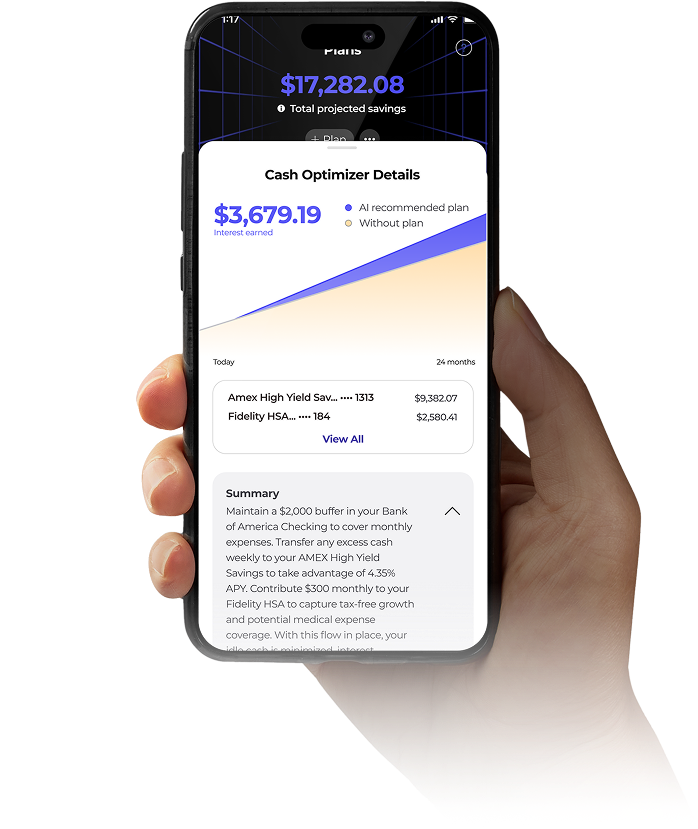
Any bank, any account, Piere makes it possible. In seconds, Piere analyzes your spending, income, wants, and goals, then creates fully automated plans for your money to follow.
- Save money automatically when you get paid — your money moves itself to the right account at the right interest rate
- Repay debt and stay debt free - Piere smartly determines which accounts to pay and when for the biggest impact
- Spend smarter — Piere keeps only the money you need for monthly expenses in your checking, moving the rest to high-yield accounts for safekeeping (and less temptation)
Get started in just seconds, and if you don't grow by at least $120 in your first year, we’ll give you back the difference.
Learn More
Turning reorgs into advantage windows
Reorganizations also create rare moments where default assumptions temporarily loosen.
Roles that were previously fixed become negotiable. Responsibilities that were informally distributed become open for redesign. Work that persisted out of habit becomes eligible for removal or consolidation.
These periods create structural flexibility that does not exist in stable conditions.
Three opportunities typically appear immediately after a reorg stabilizes: narrative reset, scope renegotiation, and portfolio cleanup. Prior assumptions about roles weaken, making it possible to reshape expectations. Scope can be clarified or expanded. Legacy work can be re-evaluated instead of continued by inertia.
The advantage in these moments goes to those who create clarity early. New managers and teams operate under uncertainty, and clear proposals become valuable inputs rather than disruptions.
At the same time, consistency matters. While others react to uncertainty, steady execution signals reliability. That perception compounds in environments where structure is constantly changing.
Over the long run, trajectories are shaped less by any single organizational chart and more by what persists across all of them: reputation, relationships, and sustained output.
Reorgs do not pause progress. They simply reveal what was actually driving it.
Tip: In the first two weeks after a reorg settles, actively define your scope and expectations before informal defaults form around you.
What’s your next spark? A new platform engineering skill? A bold pitch? A team ready to rise? Share your ideas or challenges at Tiny Big Spark. Let’s build your pyramid—together.
That’s it!
Keep innovating and stay inspired!
If you think your colleagues and friends would find this content valuable, we’d love it if you shared our newsletter with them!
PROMO CONTENT
Can email newsletters make money?
As the world becomes increasingly digital, this question will be on the minds of millions of people seeking new income streams in 2026.
The answer is—Absolutely!

That’s it for this episode!
Thank you for taking the time to read today’s email! Your support allows me to send out this newsletter for free every day.
What do you think for today’s episode? Please provide your feedback in the poll below.
How would you rate today's newsletter?
Share the newsletter with your friends and colleagues if you find it valuable.
Disclaimer: The "Tiny Big Spark" newsletter is for informational and educational purposes only, not a substitute for professional advice, including financial, legal, medical, or technical. We strive for accuracy but make no guarantees about the completeness or reliability of the information provided. Any reliance on this information is at your own risk. The views expressed are those of the authors and do not reflect any organization's official position. This newsletter may link to external sites we don't control; we do not endorse their content. We are not liable for any losses or damages from using this information.