In partnership with

The Opportunity You’re Waiting For Is Already on Your Desk
Growth rarely arrives as a formal invitation. It usually shows up disguised as a routine task, an unremarkable assignment, or a piece of work nobody is excited about.
Many people assume growth requires someone else to open a door. A manager, a leader, a system. But the truth is simpler and more uncomfortable: most opportunities are created, not assigned.
Managers can support growth, but they cannot manufacture it for you. Even excellent managers are constrained by deadlines, priorities, and their own limited bandwidth. Sometimes they simply don’t see the gaps you see — because they are not inside the daily friction you experience.
Global HR shouldn't require five tools per country

Your company going global shouldn’t mean endless headaches. Deel’s free guide shows you how to unify payroll, onboarding, and compliance across every country you operate in. No more juggling separate systems for the US, Europe, and APAC. No more Slack messages filling gaps. Just one consolidated approach that scales.
And that’s your advantage.
You are closest to the work. You see where things slow down. You see what is missing. You see what could be better.
That perspective is not a burden. It is leverage.
Tip: When a task feels boring, ask: “If this had to be done again by ten other people, what would make it easier for them?” That question alone often reveals an opportunity.

Leverage Is the Real Currency
Not all extra effort is equal. Some effort multiplies. Some effort just exhausts.
High-leverage work has three clear traits:
It helps others, not just you.
It stays useful after you’re done.
It compounds over time.
A reusable library, a clear process, an automation, or a shared standard will outlive the original task. That’s leverage.
By contrast, polishing something that will never be reused is usually just invisible labor.
This is why simply “doing what’s asked” rarely changes trajectories. It completes work, but it doesn’t expand impact.
The difference is not hours worked. The difference is where attention is invested.
Tip: Before starting a task, ask: “Will this only solve today’s problem, or will it reduce future problems too?”
Choose the version that reduces future problems.
The first pet rewards credit card with free pet insurance, meet Nibbles
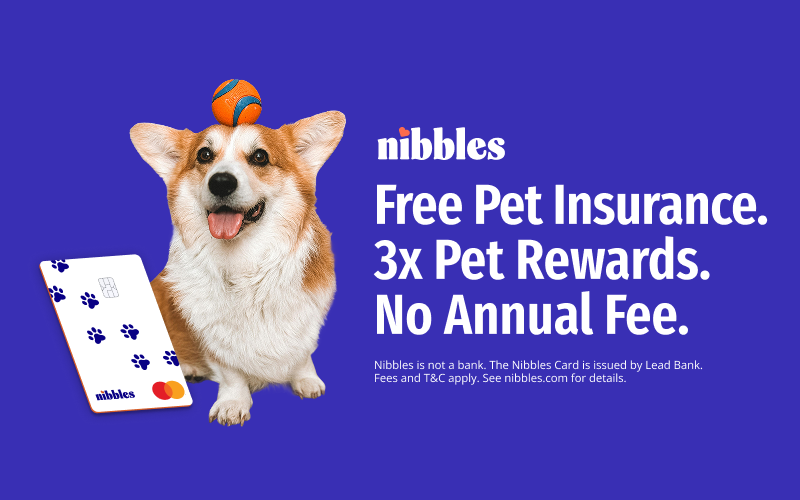
Vet bills aren’t getting any cheaper. Costs have jumped more than 60% in the last decade, and pet owners are feeling it. But one new card is actually helping lighten the load.
The Nibbles Pet Rewards Credit Card offers 3x rewards on pet purchases - from vet visits to toys - and even includes free pet insurance for one eligible pet, with no annual fee. It’s a smart way to save while keeping your best friend happy and healthy.
Reward your pet now
Nibbles is not a bank. The Nibbles Card is issued by Lead Bank. Fees and T&C apply.
Why This Works (Even When Nobody Asked for It)
Turning a small assignment into something reusable, clearer, or more scalable changes how your contribution is perceived. Not because it is louder — but because it is useful beyond the original scope.
Leaders rarely ask for what they haven’t imagined yet. But they immediately recognize value when it appears.
This is not about showing off. It’s about seeing further than the task description.
You are not paid to stay small. You are paid to create outcomes. And outcomes are rarely limited to the checklist.
Tip: Look for one adjacent improvement for every task:
Can it be documented?
Can it be standardized?
Can it be automated?
Can it be reused?
Pick only one. That’s enough to compound.
Leadership Can’t Be Automated

AI can help you move faster, but real leadership still requires human judgment.
The free resource 5 Traits AI Can’t Replace explains the traits leaders must protect in an AI-driven world and why BELAY Executive Assistants are built to support them.
Strategy Beats Effort
Not every gap is worth filling. Discernment matters.
High-leverage opportunities are:
Visible
Useful to others
Likely to be reused
Aligned with real pain points
Low-leverage work:
Is invisible
Only benefits one person
Will never be touched again
Exists only for perfection’s sake
Strategic growth is not about doing more. It is about choosing better angles of impact.
And once an opportunity is spotted, it should not stay hidden. Bring it forward. Frame it clearly. Explain why it helps others, not just why it interests you.
Tip: When proposing an idea, use this structure: “This would reduce X, improve Y, and save Z time for the team.” Clear outcomes turn ideas into decisions.
Free email without sacrificing your privacy

Gmail tracks you. Proton doesn’t. Get private email that puts your data — and your privacy — first.
The Quiet Truth About Growth
You are not building value only for your current environment. You are building a personal record of how you think, solve, and elevate work.
Skills, reputation, and judgment travel with you. They are not owned by any organization. They are owned by the person who developed them.
This is why initiative is never wasted — even when it is not immediately rewarded.
But one condition matters: the environment must be functional. If initiative is punished, stolen, or exploited, the lesson is not to shrink — it is to recognize the context clearly and plan accordingly.
In healthy environments, however, most opportunities already exist. They just look like ordinary tasks.
And the people who grow fastest are not the ones waiting for opportunity.
They are the ones who recognize it before it has a name.
Final Tips for Immediate Use:
Finish the task. Then upgrade the outcome.
Choose leverage over perfection.
Help others, not just yourself.
Make work reusable.
Communicate value simply.
Build for the future, not just the deadline.
Closing Thought
The most powerful opportunities rarely arrive labeled as such. They arrive as ordinary responsibilities. What turns them into opportunities is not permission. It is perspective.
What’s your next spark? A new platform engineering skill? A bold pitch? A team ready to rise? Share your ideas or challenges at Tiny Big Spark. Let’s build your pyramid—together.
That’s it!
Keep innovating and stay inspired!
If you think your colleagues and friends would find this content valuable, we’d love it if you shared our newsletter with them!
PROMO CONTENT
Can email newsletters make money?
As the world becomes increasingly digital, this question will be on the minds of millions of people seeking new income streams in 2026.
The answer is—Absolutely!

That’s it for this episode!
Thank you for taking the time to read today’s email! Your support allows me to send out this newsletter for free every day.
What do you think for today’s episode? Please provide your feedback in the poll below.
How would you rate today's newsletter?
Share the newsletter with your friends and colleagues if you find it valuable.
Disclaimer: The "Tiny Big Spark" newsletter is for informational and educational purposes only, not a substitute for professional advice, including financial, legal, medical, or technical. We strive for accuracy but make no guarantees about the completeness or reliability of the information provided. Any reliance on this information is at your own risk. The views expressed are those of the authors and do not reflect any organization's official position. This newsletter may link to external sites we don't control; we do not endorse their content. We are not liable for any losses or damages from using this information.