In partnership with

Clarity Wins: Why the Smallest Improvements Create the Biggest Momentum
The biggest breakthroughs rarely begin with a groundbreaking idea. More often, they begin with something far less glamorous: taking the time to make work easier to understand.
When responsibilities grow, projects become more complex, and expectations continue to rise, confusion becomes one of the most expensive obstacles. It slows decisions, creates unnecessary mistakes, and forces people to spend more energy figuring out how to work than actually doing meaningful work.
That is why clarity has become one of the most valuable skills today.
For years, organizations relied heavily on what people simply "knew." Information stayed inside conversations, individual experiences, or unwritten habits. Teams functioned because someone remembered how something was done or because a few experienced people filled in the gaps whenever problems appeared.
That approach works—until it doesn't.
As work expands, relying on memory becomes increasingly fragile. Processes become inconsistent. New people struggle to catch up. Small misunderstandings multiply into larger setbacks.
Trade What Happens Next

From elections and inflation to sports, tech, and more, Kalshi lets you trade on the real-world events you already follow. Buy “Yes” or “No” contracts based on what you think will happen, then earn returns if you’re right.
Pick a market, make your prediction, and put your knowledge to work.
Bonus credit varies from $15 to $500. Terms apply.
The answer isn't creating endless procedures or turning every task into bureaucracy. The goal is making the important things visible enough that anyone can understand them without needing someone standing beside them every step of the way.
Good systems don't remove flexibility.
They remove unnecessary guessing.
Think about the moments that create the most frustration during a busy week. It's rarely the difficult work itself. More often, it's wondering where something belongs, who owns it, what the expectation actually is, or whether the work is being done correctly.
Clear documentation, thoughtful processes, and well-defined expectations don't eliminate creativity. Instead, they free people to spend more time solving meaningful problems instead of solving avoidable confusion.
The rise of AI has made this even more obvious.
Unlike people, AI doesn't remember yesterday's conversations unless those instructions exist somewhere it can access. Every new interaction starts without context unless someone intentionally provides it. That immediately exposes every missing document, every undefined process, and every assumption that previously survived because humans filled in the blanks.
Ironically, the discipline that makes AI more effective is the same discipline that has always made people more effective.
Write things down. Explain expectations. Define success clearly. Create systems that help everyone perform consistently. The technology may be new, but the principle isn't. The better the clarity, the smoother the work becomes.
Tip: Before adding another meeting to solve recurring confusion, ask whether the issue could instead be solved with clearer instructions or better documentation.
Unlock Your Next Income Stream: 100 Side Hustles for Ambitious Founders
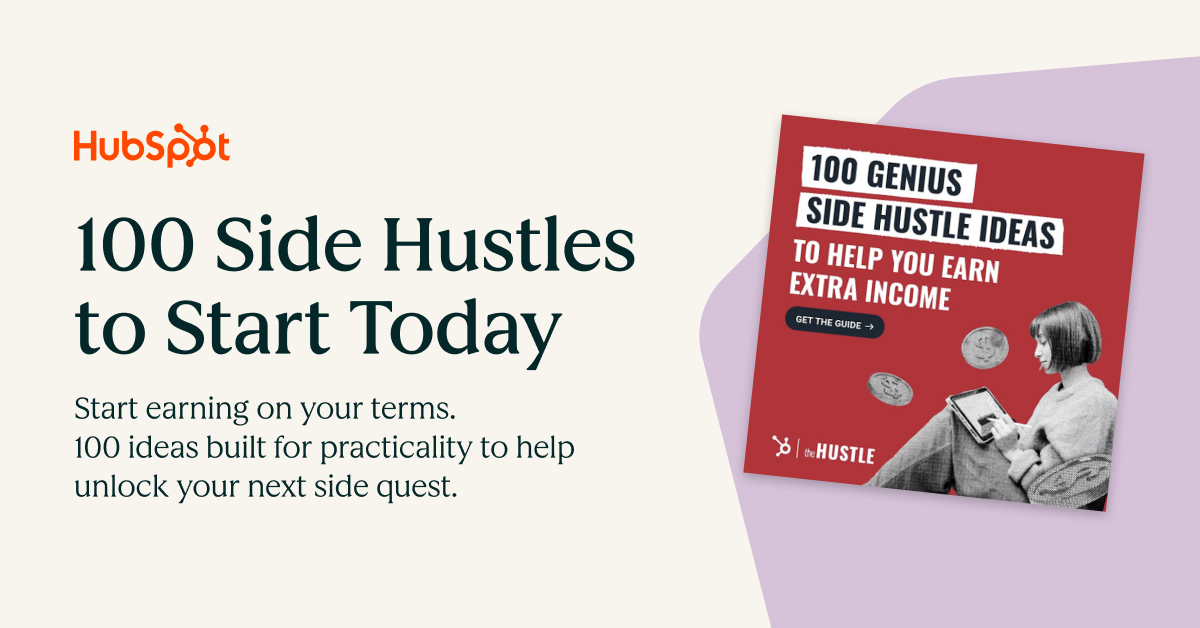
In a world where financial freedom feels like a distant dream, smart women are building wealth on their own terms.
• Finally, a curated database of 100 proven side hustles (that actually work)
• Each idea comes with required startup costs, time investment, and potential earnings
• Exclusive insights from founders who've turned side gigs into 6-figure empires
• Detailed skill requirements so you can match your talents to the right opportunity
• Bonus: Priority scoring system to identify which hustles align with your lifestyle
Don't let another month slip by watching others build their empire. Your next income stream is hiding in our database, waiting to be discovered.
👉 Download the Side Hustle Database Now
Stop Fixing Symptoms. Build Better Systems.
Whenever something goes wrong, the immediate temptation is to fix the problem as quickly as possible.
That instinct feels productive.
Sometimes it is. But solving today's mistake isn't always the same as preventing tomorrow's.
One of the biggest shifts happening today is moving from reacting to individual problems toward eliminating entire categories of problems.
Imagine discovering the same issue repeatedly.
At first, someone corrects it manually. Then another person encounters it. Soon, another team spends valuable time fixing exactly the same thing.
Nothing is technically broken anymore—but nothing has actually improved either.
Progress begins when the question changes.
Instead of asking, "How do we fix this?"
Ask, "How do we make sure this never happens again?"
That shift transforms temporary solutions into lasting improvements.
Historically, building permanent safeguards required significant time and resources. Because automation was expensive, organizations carefully chose which problems deserved that investment.
Today, advances in AI have dramatically lowered that cost.
Tasks that once stayed on the backlog for months can now be documented, standardized, automated, and refined much faster. Instead of repeatedly correcting small errors, teams can create guardrails that reduce future mistakes before they happen.
This doesn't mean chasing automation for everything.
Not every inconvenience deserves a new process. Not every mistake deserves another checklist. The real value comes from identifying patterns. If something happens once, pay attention. If it happens twice, investigate.
If it keeps happening, the system—not the people—probably needs improvement.
Better systems reduce unnecessary friction.
They protect quality. They preserve focus. Most importantly, they allow people to spend more energy creating value instead of repeating corrections. That's where sustainable progress begins.
Tip: Whenever the same issue appears more than once, document it immediately. Patterns are easier to solve when they're captured early instead of remembered later.
The CRM Behind Every Win

Attio is the agentic CRM that runs the work behind every win.
With agents and automations that build pipeline, chase signals, and move deals forward, Attio orchestrates your revenue work around the clock.
Loved by high-growth startups like Granola, Modal, and Wispr Flow, Attio amplifies what your team can achieve.

Why Getting Closer to the Work Matters
Leadership has often been associated with stepping back to see the bigger picture.
There is wisdom in that. But there is also risk. The farther someone moves from the actual work, the easier it becomes to misunderstand what people experience every day.
Technology is changing so quickly that old playbooks no longer provide every answer.
Instead of relying entirely on historical experience, effective leaders increasingly need firsthand understanding of how work is actually evolving.
That doesn't mean doing everyone's job It means staying close enough to understand where the real friction exists. Sometimes a process looks efficient on paper but creates unnecessary delays in practice.
Sometimes a workflow seems logical until someone actually tries using it. Sometimes the smallest daily frustration quietly consumes hours across an entire team. Those insights rarely appear in dashboards. They appear inside the work itself. Getting closer to the work also changes decision-making. Instead of assuming where improvements are needed, decisions become grounded in direct observation.
The result is greater accuracy, faster adjustments, and stronger systems over time.
This is especially important in environments where AI increasingly handles repetitive execution.
The human advantage shifts toward asking better questions, identifying hidden gaps, improving workflows, and deciding what deserves attention.
Technology can accelerate execution.
It cannot replace thoughtful judgment.
As automation grows more capable, clarity, prioritization, and critical thinking become even more valuable.
The tools may complete tasks faster.
People still determine whether the right tasks are being done in the first place.
That's why understanding the work matters more—not less—in an AI-driven environment.
Tip: Spend time observing how work actually happens instead of relying only on summaries. Small daily frustrations often reveal the biggest opportunities for improvement.
Thinking about Reddit ads? Get $500 in free credit when you spend $500 and expert 1:1 guidance

500M+ people use Reddit every month. By showing up where these users research and validate products, you can tap into the conversations that drive more trust and higher conversions.
And making ads is simple: with the Simple Create campaign builder, you can launch in minutes. Plus, Reddit offers free, 1:1 guidance from an ads expert to help you start and optimize your campaign.
Reach your audience on the platform they already trust.
Launch your first Reddit campaign ↗️
New accounts only, limit 1 per account, additional terms apply.
The Real Skill Isn't Doing More. It's Knowing What Deserves Attention.
Modern work doesn't suffer from a shortage of tasks.
It suffers from a shortage of attention.
Every day introduces new notifications, requests, ideas, revisions, and unexpected problems.
Without careful prioritization, everything begins to feel equally urgent.
But it isn't. One of the most valuable habits anyone can develop is deciding what deserves immediate focus—and what doesn't. This requires discipline.
Some issues demand immediate action. Others simply create noise. The challenge is recognizing the difference. As AI takes on more repetitive work, the volume of activity can actually increase.
More tasks become possible. More ideas become feasible.
More improvements appear within reach. That creates a new challenge. Just because something can be done doesn't mean it should be done right now. Effective systems create natural stopping points. When repeated mistakes appear, pause.
When confusion grows, clarify.
When priorities become scattered, simplify.
Progress isn't measured by how many tasks stay in motion.
It's measured by whether meaningful work continues moving forward. The most effective workflows reduce unnecessary decisions so attention remains available for the decisions that truly matter. Attention is limited. Protecting it has become a competitive advantage.
Tip: At the beginning of each day, identify the three outcomes that matter most. Let those priorities guide every new request that competes for your attention.
Clarity Is the Competitive Advantage That Lasts
Technology will continue evolving.
Tools will become faster.
Automation will become smarter.
Processes will continue changing.
One principle, however, remains remarkably consistent.
Clear thinking creates better work.
Whether writing documentation, designing workflows, reviewing quality, or using AI responsibly, clarity becomes the foundation that supports everything else.
It shapes communication. It strengthens collaboration. It reduces unnecessary mistakes. It helps good ideas survive long enough to become excellent execution.
Perhaps the biggest misconception is believing clarity slows progress because it requires extra effort upfront. In reality, clarity often creates speed.
When expectations are obvious, fewer questions interrupt momentum. When ownership is clear, fewer tasks fall through the cracks. When standards are documented, quality becomes easier to maintain consistently.
Instead of repeatedly solving the same problems, energy shifts toward building something better.
That is how meaningful progress compounds.
Not through constant urgency. Not through endless activity. But through deliberate improvements that make tomorrow easier than today.
The tools may continue changing. The platforms will evolve. New technologies will emerge. Yet the organizations—and individuals—that consistently thrive will likely share one characteristic above all others:
They choose clarity before complexity.
Because when clarity becomes part of the system, everything built on top of it becomes stronger.
Tip: Whenever introducing a new process, ask one simple question: "Will this make the next person's work clearer?" If the answer is yes, it is probably worth keeping.
What’s your next spark? A new platform engineering skill? A bold pitch? A team ready to rise? Share your ideas or challenges at Tiny Big Spark. Let’s build your pyramid—together.
That’s it!
Keep innovating and stay inspired!
If you think your colleagues and friends would find this content valuable, we’d love it if you shared our newsletter with them!
PROMO CONTENT
Can email newsletters make money?
As the world becomes increasingly digital, this question will be on the minds of millions of people seeking new income streams in 2026.
The answer is—Absolutely!

That’s it for this episode!
Thank you for taking the time to read today’s email! Your support allows me to send out this newsletter for free every day.
What do you think for today’s episode? Please provide your feedback in the poll below.
How would you rate today's newsletter?
Share the newsletter with your friends and colleagues if you find it valuable.
Disclaimer: The "Tiny Big Spark" newsletter is for informational and educational purposes only, not a substitute for professional advice, including financial, legal, medical, or technical. We strive for accuracy but make no guarantees about the completeness or reliability of the information provided. Any reliance on this information is at your own risk. The views expressed are those of the authors and do not reflect any organization's official position. This newsletter may link to external sites we don't control; we do not endorse their content. We are not liable for any losses or damages from using this information.