In partnership with

Focus First: Mastering the Main Thing
Success is rarely about doing more. It’s about doing the right thing. In fast-moving, complex environments, the difference between effort that counts and effort that disappears into noise often lies in identifying the main thing—the one activity or outcome that drives the majority of results.
Understanding this isn’t a luxury; it’s a survival skill. When focus is misaligned, effort gets wasted on peripherals, while the core outcome lags. Mastering the main thing transforms chaos into progress.
Cash Flow Tight? We've Got You.
Get the funding you need- fast approvals, fixed terms, and no unexpected costs.
Apply Now
Why the Main Thing Matters More Than You Think
In technology projects, shipping is the main thing. Not architecture debates, not debating the newest frameworks, not obsessing over minor design choices. Shipping—the delivery of working, valuable results—is what moves the needle.
This principle aligns with the Pareto or 80/20 rule, but in practice, the ratio can be even more extreme: 90/10 or 99/1. A single project shipped successfully often outweighs dozens of well-intentioned but incomplete efforts.
Better prompts. Better AI output.

AI gets smarter when your input is complete. Wispr Flow helps you think out loud and capture full context by voice, then turns that speech into a clean, structured prompt you can paste into ChatGPT, Claude, or any assistant. No more chopping up thoughts into typed paragraphs. Preserve constraints, examples, edge cases, and tone by speaking them once. The result is faster iteration, more precise outputs, and less time re-prompting. Try Wispr Flow for AI or see a 30-second demo.
The same applies beyond technology:
Personal finance: Saving consistently matters far more than hunting every deal if a major expense overwhelms your budget.
Writing: Clear communication matters more than perfect grammar or style.
Fitness: Consistent effort and injury prevention outweigh finding the “perfect” workout.
Focus is a multiplier: getting the main thing right allows small mistakes elsewhere to be tolerated. Misalign with the main thing, and effort multiplies into wasted hours and missed opportunities.
Tip: Before starting any project, identify the one outcome that will define success. Everything else is context, not the main goal.

Identifying the Main Thing
Finding the main thing is deceptively difficult. It requires observing patterns of success and failure and questioning assumptions. The people rewarded, the outcomes celebrated, and the patterns repeated are your indicators.
Ask yourself:
Which achievements actually receive recognition?
Who is advancing despite imperfections elsewhere?
Where does leadership attention focus?
Surprising successes are particularly informative. If someone appears “ineffective” by conventional measures but is rewarded consistently, their efforts are aligned with the main thing. Conversely, if diligent, technically skilled contributors are ignored, their focus may be misaligned.
Tip: Track the outcomes of projects and the recognition given. Use this data to adjust your own focus toward the true main thing.
A.I. & Robotics is Reshaping the Smart Home and Big Tech Wants In
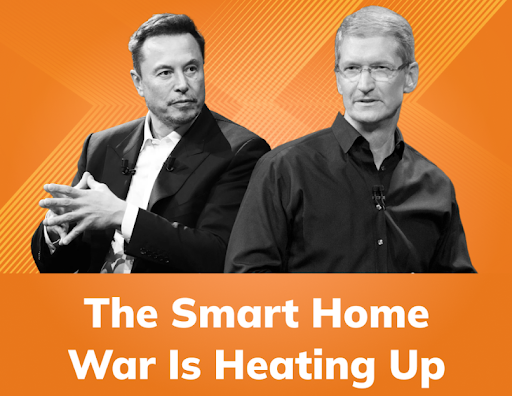
Apple is rolling out Face-ID door locks and robotic smart displays. Elon Musk is quietly building the Tesla Smart Home. A.I. and robotics are driving the next wave of smart home innovation — and the window is open to invest in the companies that can define it.
One category is far bigger than most people realize: window shades. There are billions across homes, offices, and hotels — and almost all of them are still manual.
The last wave created major outcomes. Google bought Nest for $3.2 Billion. Amazon bought Ring for $1.2 Billion. Investors are now hunting for the next category leader — the one that can deliver real exit potential.
RYSE is leading this market with 10 patents, $15 million in revenue, and 200% annual growth. Their a prime acquisition target in a massive, untouched market. And RYSE is pre-IPO with a reserved Nasdaq ticker, giving investors exposure to multiple potential exit paths.
At $2.35 per share, this is your moment to get in before the next wave hits.
Invest today before the share price changes on Feb 28.
The Challenge of Commitment
Even when the main thing is clear, it is hard to commit. Humans naturally gravitate toward visible, tangible activity rather than abstract prioritization. Doing something—anything—feels productive, even when it contributes little.
Complicating this further, the main thing might feel unappealing. In tech companies, for example, the main thing often boils down to delivering projects that increase value for stakeholders or satisfy management priorities—tasks that may feel repetitive, bureaucratic, or detached from personal passion.
Here, the challenge is not effort but alignment. Misalignment creates tension: passionate work may generate little reward if it doesn’t serve the main thing. Working hard on the wrong objective accelerates burnout and frustration.
Tip: Focus on the main thing even if it feels mundane. Optimize personal passion and development outside core responsibilities, but let strategic priorities drive recognized results.
Free email without sacrificing your privacy

Gmail tracks you. Proton doesn’t. Get private email that puts your data — and your privacy — first.
Adapting to Changing Priorities
The main thing is not static. Context, market pressure, and organizational culture shift what matters most. Ten years ago, being well-liked and socially visible might have outweighed technical delivery. Today, the ability to execute projects reliably is paramount.
This shift demonstrates a critical lesson: specialization can be a trap. Mastering one niche deeply may leave you vulnerable when the environment changes. Diversifying skills—becoming “pretty good” at multiple areas—provides resilience without diluting focus on what currently drives value.
Understanding the main thing also requires monitoring subtle changes in rewards and recognition. Promotions, responsibility assignments, and decision-making authority often reflect what the organization values, even when unwritten.
Tip: Reassess priorities regularly. Look at organizational signals, not just personal inclination. Adapt focus to align with what produces real outcomes today.
Stop guessing. Start scaling.

See the top-performing Facebook ads in your niche and replicate them using AI. Gethookd shows you what’s actually working so you can increase ROI and scale ad spend with confidence.
Strategies for Maintaining Focus
Reflect Before Acting: Spend time determining the main thing before diving into tasks. Half an hour of reflection can save days of misaligned effort.
Observe Patterns of Recognition: Identify where influence, reward, and acknowledgment converge. Let these patterns guide your priorities.
Allocate Energy Wisely: Commit maximum effort to activities that deliver the main outcome. Let minor errors in peripheral tasks slide.
Hedge Skill Risks: While focusing, build competence in related areas to remain adaptable to changing priorities.
Measure Progress: Track outputs and outcomes that correlate with success. Adjust focus if metrics show misalignment.
When effort is directed at the main thing, the impact multiplies exponentially. Minor mistakes or imperfect techniques become almost irrelevant because the core objective is achieved. Conversely, even flawless execution on secondary priorities rarely moves the needle.
Tip: Treat the main thing as your compass. Let it guide choices, time allocation, and energy. Everything else is a supporting actor.
Final Thought
Mastering the main thing isn’t a one-time task—it’s a continuous process of observation, reflection, and adaptation. By prioritizing focus over busyness, you align effort with results, reduce wasted energy, and ensure progress even in shifting environments. The main thing may not be glamorous, but it’s what determines whether your work leaves a mark or disappears into noise.
Tip: Periodically ask: “If I achieved nothing else, what outcome would define success today?” Make that the primary focus of all decisions.
What’s your next spark? A new platform engineering skill? A bold pitch? A team ready to rise? Share your ideas or challenges at Tiny Big Spark. Let’s build your pyramid—together.
That’s it!
Keep innovating and stay inspired!
If you think your colleagues and friends would find this content valuable, we’d love it if you shared our newsletter with them!
PROMO CONTENT
Can email newsletters make money?
As the world becomes increasingly digital, this question will be on the minds of millions of people seeking new income streams in 2026.
The answer is—Absolutely!

That’s it for this episode!
Thank you for taking the time to read today’s email! Your support allows me to send out this newsletter for free every day.
What do you think for today’s episode? Please provide your feedback in the poll below.
How would you rate today's newsletter?
Share the newsletter with your friends and colleagues if you find it valuable.
Disclaimer: The "Tiny Big Spark" newsletter is for informational and educational purposes only, not a substitute for professional advice, including financial, legal, medical, or technical. We strive for accuracy but make no guarantees about the completeness or reliability of the information provided. Any reliance on this information is at your own risk. The views expressed are those of the authors and do not reflect any organization's official position. This newsletter may link to external sites we don't control; we do not endorse their content. We are not liable for any losses or damages from using this information.