In partnership with

The Hidden Cost of Being the Person Who Always Saves the Day
Being useful feels good.
It creates momentum when projects stall, calms uncertainty when priorities become unclear, and provides reassurance when teams encounter obstacles they cannot immediately solve. In many organizations, the people who consistently step in during difficult moments are often viewed as dependable leaders. They are the ones everyone calls when something needs to get done.
But there is a less obvious side to usefulness that rarely gets discussed.
Sometimes the very act of helping can quietly weaken the systems, habits, and accountability structures that organizations depend on to function effectively.
Consider what happens when a piece of work repeatedly stalls until a manager becomes involved. A decision sits untouched until someone senior intervenes. A customer issue lingers until a leader sends a message. A dependency remains unresolved until additional pressure is applied from above.
Help make better ads

Did you recently see an ad for Roku Ads Manager in a newsletter? We’re running a short brand lift survey to understand what’s actually breaking through (and what’s not).
It takes about 20 seconds, the questions are super easy, and your feedback directly helps us improve how we show up in the newsletters you read and love.
If you’ve got a few moments, we’d really appreciate your insight.
The work eventually moves. The problem appears solved.
Yet the real question is not whether progress was made.
The real question is why progress required intervention in the first place.
Many leadership challenges are not created by a lack of intelligence, talent, or effort. They emerge because people become accustomed to relying on someone else to create momentum whenever things become uncomfortable.
Over time, teams begin to internalize an unspoken lesson: if uncertainty lasts long enough, someone higher up will eventually step in and carry the responsibility.
That lesson is far more dangerous than any delayed project.
Because once people stop believing they are responsible for creating movement, ownership slowly starts to disappear.
Tip: The next time a stalled project suddenly moves after your involvement, spend as much time examining why it stalled as you spend celebrating the outcome.
Thinking about Reddit ads? Get $500 in free credit when you spend $500 and expert 1:1 guidance

500M+ people use Reddit every month. By showing up where these users research and validate products, you can tap into the conversations that drive more trust and higher conversions.
And making ads is simple: with the Simple Create campaign builder, you can launch in minutes. Plus, Reddit offers free, 1:1 guidance from an ads expert to help you start and optimize your campaign.
Reach your audience on the platform they already trust.
Launch your first Reddit campaign ↗️
New accounts only, limit 1 per account, additional terms apply.
The Trap of Solving Problems Too Quickly
Speed is often mistaken for effectiveness.
When someone has the knowledge, authority, and experience to solve a problem immediately, it can feel irresponsible not to step in. Why spend days coaching someone through a challenge when the answer is already clear?
The temptation is understandable.
Especially for leaders who were once high-performing individual contributors, solving problems can feel natural. It is familiar territory. There is comfort in execution because execution produces visible results.
Coaching, on the other hand, is slower. Delegation is slower. Developing ownership is slower.
Yet leadership is rarely measured by how many problems are solved personally. It is measured by how many problems can be solved without personal involvement.
This distinction matters because organizations grow through capability, not dependency.
Every time someone jumps in to rescue a struggling project, they may be fixing the immediate issue while simultaneously postponing a more important conversation. Was the owner unclear? Were expectations misunderstood? Was the priority never communicated effectively? Or was someone simply not following through?
These questions often remain unanswered because the urgent issue gets resolved before anyone investigates the underlying cause.
The result is predictable.
The same problems reappear in slightly different forms. The same bottlenecks emerge. The same interventions become necessary.
What initially looked like leadership eventually becomes a recurring rescue operation.
And rescue operations do not scale.
Tip: Before solving a problem yourself, ask whether the goal is to complete the task or strengthen the system that produces the task.
When Rescue Creates Dependency
Most organizational habits are not taught directly.
They are learned through repetition.
People observe what gets rewarded, what gets ignored, and what ultimately drives results. These observations become operating norms.
If teams repeatedly see that important work only gains urgency when leadership becomes involved, they begin to wait for leadership involvement.
If decisions only happen after escalation, escalation becomes part of the process.
If accountability only appears when managers intervene, accountability starts to feel optional until that moment arrives.
This rarely happens intentionally.
In fact, it often develops because leaders genuinely care about outcomes. They want customers protected. They want deadlines met. They want reliability maintained.
The problem is that repeated intervention changes behavior.
What starts as support gradually becomes expectation.
The team no longer sees leadership involvement as an exception. It becomes a requirement.
At that point, managers stop acting as leaders and start functioning as backup execution engines.
That shift creates hidden costs.
Time becomes fragmented. Strategic work gets delayed. Energy becomes consumed by recurring operational issues. Most importantly, leaders lose visibility into the actual performance of the team because they are constantly compensating for gaps before those gaps can be fully observed.
Eventually, nobody knows whether the team can operate independently because it rarely gets the opportunity to prove it.
The rescue itself obscures the truth.
Tip: Pay attention to recurring interventions. One intervention is support. Repeated interventions often reveal a pattern worth investigating.
Speak the email. Send the email.

Talk through your reply and get polished, professional text ready to paste. Wispr Flow strips filler, fixes grammar, and formats everything. 89% sent with zero edits. Works everywhere.

Looking Beneath the Surface
Not every stalled project points to the same problem.
This is where thoughtful leadership becomes essential.
Sometimes ownership genuinely is unclear. Reorganizations, shifting priorities, and cross-functional projects can create confusion about who is responsible for what.
Sometimes the issue is knowledge. A team member may lack the experience, context, or technical expertise needed to move work forward confidently.
Sometimes priorities are competing. Everyone is busy, but nobody is aligned on which problem matters most.
And sometimes, despite clear expectations and sufficient support, performance simply falls short.
This last possibility is often the hardest to confront.
Many leaders instinctively search for explanations that feel less personal. It feels more comfortable to blame process, communication, or organizational complexity than to acknowledge that someone may not be meeting expectations.
But avoiding that reality does not make it disappear.
In fact, repeated interventions can unintentionally shield performance issues from view. The work gets completed because someone else ensures it gets completed. Deadlines are met because someone else creates urgency. Problems get resolved because someone else assumes responsibility.
The visible outcome looks successful.
The underlying issue remains untouched.
Strong leadership requires the willingness to distinguish between temporary obstacles and persistent capability gaps. They require different solutions, and confusing one for the other creates long-term consequences.
Every stalled project contains information.
The challenge is learning how to read it.
Tip: Treat recurring delays as signals rather than isolated incidents. Patterns often reveal what individual events hide.
What if your money could drive itself to your goals?
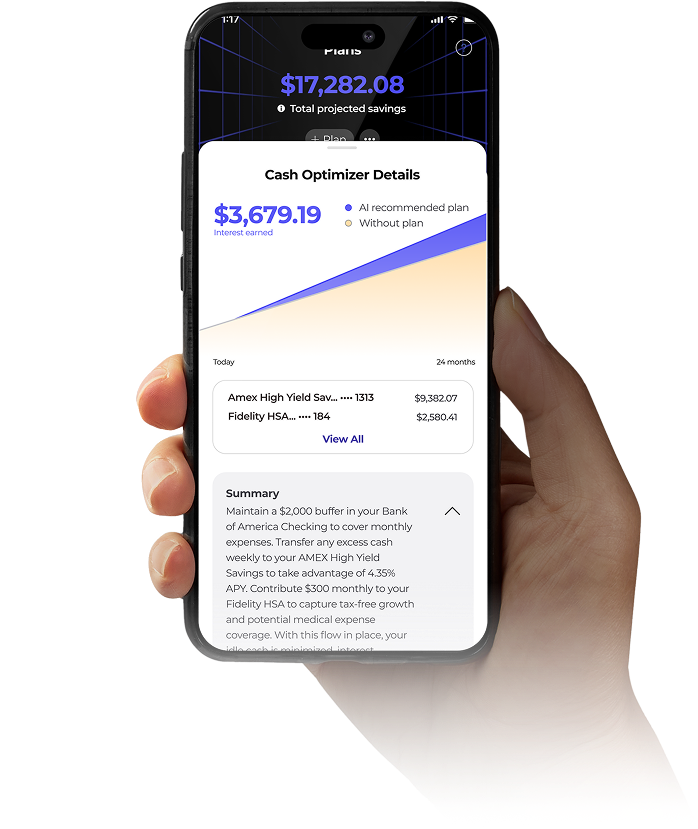
Any bank, any account, Piere makes it possible. In seconds, Piere analyzes your spending, income, wants, and goals, then creates fully automated plans for your money to follow.
- Save money automatically when you get paid — your money moves itself to the right account at the right interest rate
- Repay debt and stay debt free - Piere smartly determines which accounts to pay and when for the biggest impact
- Spend smarter — Piere keeps only the money you need for monthly expenses in your checking, moving the rest to high-yield accounts for safekeeping (and less temptation)
Get started in just seconds, and if you don't grow by at least $120 in your first year, we’ll give you back the difference.
Learn More
Redefining What It Means to Be Helpful
The most effective leaders are not necessarily the most useful people in the room.
They are often the people who create conditions where usefulness becomes less necessary over time.
This does not mean becoming distant or refusing to help when challenges arise. Important work should not sit idle while lessons are being taught. Customers should not suffer because leaders are trying to prove a point about accountability.
There will always be moments when intervention is necessary.
The difference lies in what happens afterward.
Once the immediate issue has been addressed, the deeper questions must follow. Why did this require intervention? What was missing? What capability needs strengthening? What system needs improvement? What expectation needs clarification?
Without those conversations, intervention becomes habit.
With those conversations, intervention becomes learning.
That distinction separates leaders who create dependence from leaders who build resilience.
Because the goal is not to become the person who can solve every problem.
The goal is to build a team that no longer needs saving.
And that may be the most difficult leadership transition of all.
Helping feels productive.
Building people who can help themselves creates something far more valuable: sustained performance that continues long after the leader has stepped away.
Tip: Measure success not by how often you save the day, but by how rarely your team needs saving in the first place.
What’s your next spark? A new platform engineering skill? A bold pitch? A team ready to rise? Share your ideas or challenges at Tiny Big Spark. Let’s build your pyramid—together.
That’s it!
Keep innovating and stay inspired!
If you think your colleagues and friends would find this content valuable, we’d love it if you shared our newsletter with them!
PROMO CONTENT
Can email newsletters make money?
As the world becomes increasingly digital, this question will be on the minds of millions of people seeking new income streams in 2026.
The answer is—Absolutely!

That’s it for this episode!
Thank you for taking the time to read today’s email! Your support allows me to send out this newsletter for free every day.
What do you think for today’s episode? Please provide your feedback in the poll below.
How would you rate today's newsletter?
Share the newsletter with your friends and colleagues if you find it valuable.
Disclaimer: The "Tiny Big Spark" newsletter is for informational and educational purposes only, not a substitute for professional advice, including financial, legal, medical, or technical. We strive for accuracy but make no guarantees about the completeness or reliability of the information provided. Any reliance on this information is at your own risk. The views expressed are those of the authors and do not reflect any organization's official position. This newsletter may link to external sites we don't control; we do not endorse their content. We are not liable for any losses or damages from using this information.