Today in 30 seconds
AI can write a polished six-page memo in minutes. What it can't do is prove that the author thought it through. Steve Huynh spent almost twenty years in Amazon's writing culture, and he argues that AI has quietly emptied it out. The fix isn't banning AI. It's choosing which documents still need a human mind behind every sentence.

The problem
Amazon's six-pager worked because writing full sentences forced clear thinking before anyone asked for an hour of a team's time. Huynh shares a story from his community. A senior product manager opened a review on a six-pager, and two minutes in it was obvious he was reading it for the first time. Nobody in the room spoke up. Engineers now tag documents like that "AI;DR", short for "AI; didn't read". Their logic is simple: if a model wrote it, a model can summarize it. He hears that peer feedback in performance reviews goes the same way, written by AI and rolled up by AI.
The cost isn't the memo. One of two things happens next. Either a room of senior people loses an hour reworking a plan nobody thought through, or the team executes it anyway.
One-way doors and two-way doors
Huynh borrows Bezos's framing:
Two-way doors are reversible work, such as drafts, brainstorming, editing, status notes and boilerplate. Let AI help freely.
One-way doors are decisions that are hard to undo, such as annual plans, major re-architectures, PR-FAQs, performance reviews and promotion documents. A human writes them, and a human reads them.
He adds a few rules from an engineering policy at Clay. Own every word you send, whoever drafted it. Label generated text you quote. Spend more time writing than you expect readers to spend reading.
Demystify AI for Your Business in Just 4 Steps
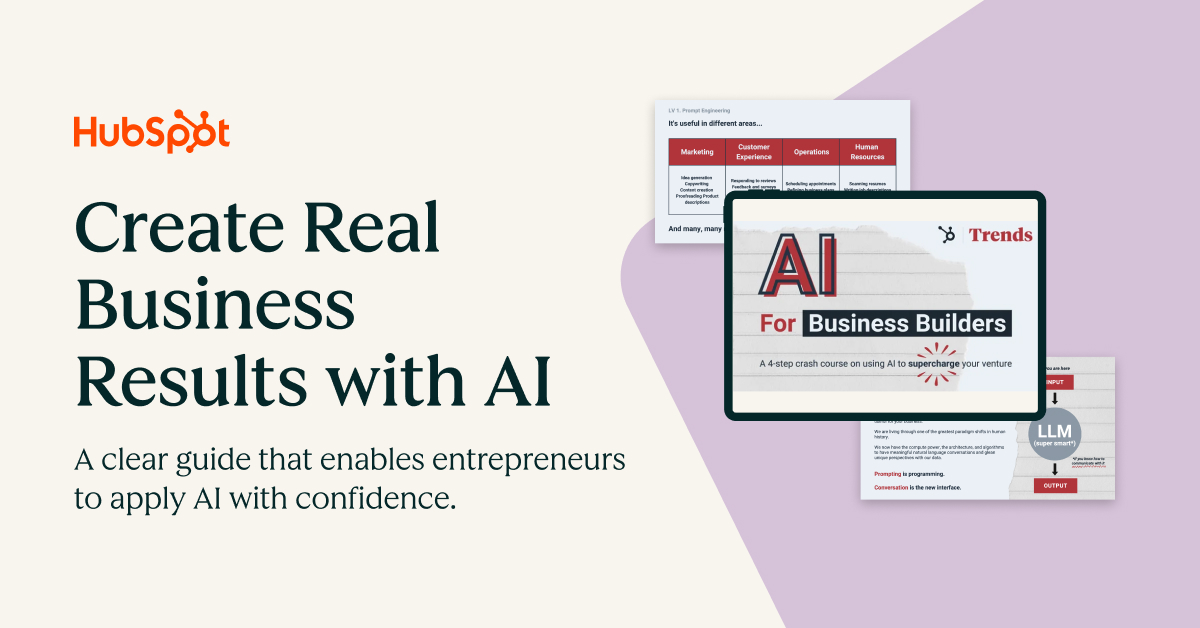
Overwhelmed by AI? HubSpot's free guide cuts through the noise. Get the ultimate crash course for non-technical entrepreneurs who want to harness AI's power—without getting lost in the jargon.
"AI for Business Builders" delivers:
• A 4-part roadmap to AI mastery
• Jargon-free explanations of large language models
• Practical prompt engineering tips you can use today
• Real-world examples of AI boosting businesses like yours
Arm yourself with the knowledge to make informed AI investments and skyrocket your startup's growth.
Download Your Free Guide Now
My take
As a leader, a document is a promise that I did the thinking so my team doesn't have to redo it. When I review a design doc or a plan now, I ask the author to walk me through the trade-offs without the page in front of them. If they can, the doc did its job, however it was drafted. If they can't, the meeting isn't ready. Performance reviews are the line I won't cross. If my feedback on someone is generated, I've told them they weren't worth my attention.
Try this week
List your team's recurring documents and mark each one as a one-way or two-way door.
For one-way-door docs, add a single line at the top: "Author has reviewed and stands behind every sentence."
In your next review, open with two minutes of the author explaining the decision before anyone reads.
Source: Steve Huynh, "On the Death of Amazon's Writing Culture", A Life Engineered, Oct 14, 2026. Summarized with commentary. Read the full piece at the link above.
Keep going, one small spark at a time.
Erwin
PROMO CONTENT
Can email newsletters make money?
As the world becomes increasingly digital, this question will be on the minds of millions of people seeking new income streams in 2026.
The answer is—Absolutely!

That’s it for this episode!
Thank you for taking the time to read today’s email! Your support allows me to send out this newsletter for free every day.
What do you think for today’s episode? Please provide your feedback in the poll below.
How would you rate today's newsletter?
Share the newsletter with your friends and colleagues if you find it valuable.
Disclaimer: The "Tiny Big Spark" newsletter is for informational and educational purposes only, not a substitute for professional advice, including financial, legal, medical, or technical. We strive for accuracy but make no guarantees about the completeness or reliability of the information provided. Any reliance on this information is at your own risk. The views expressed are those of the authors and do not reflect any organization's official position. This newsletter may link to external sites we don't control; we do not endorse their content. We are not liable for any losses or damages from using this information.
