In partnership with

Engineering Maturity: The Hidden Edge Behind Reliable AI
The excitement of building AI applications often comes with chaos. A prompt that works in testing might fail under live conditions. Tool calls may be unreliable, users can interrupt, and outputs may hallucinate. This creates a cycle of rapid trial and error—demo days succeed, but production can quickly expose fragility.
The critical differentiator between teams that ship reliably and teams that only demo is engineering maturity. It’s not about picking the right model, using the latest framework, or mastering prompt hacks. It’s about building systems, processes, and infrastructure that allow discovery and learning at speed.
Looking For Stable Retirement Income Without Guesswork?

If you want dependable income and less market stress, annuities can be a strong fit. Leverage Planning helps you compare rates and features across 30+ established insurers, with guidance from licensed annuity advisors who are not tied to one carrier.
• Side By Side Comparisons
• Competitive Rates And Clear Tradeoffs
• Support From Quote To Purchase
Minimum investment: $50,000
Check Rates Now
Engineering maturity ensures that features work as intended and ship within expected timelines. Teams without it spend most of their time debugging, regressing, and redoing work—appearing busy without making real progress.
Tip: Treat production as a learning environment. Prioritize infrastructure that provides visibility and reproducibility, rather than shortcuts for speed.
How Jennifer Aniston’s LolaVie brand grew sales 40% with CTV ads

The DTC beauty category is crowded. To break through, Jennifer Aniston’s brand LolaVie, worked with Roku Ads Manager to easily set up, test, and optimize CTV ad creatives. The campaign helped drive a big lift in sales and customer growth, helping LolaVie break through in the crowded beauty category.
Discovery, Not Invention
Unlike traditional software, AI engineering is empirical. There is no first-principles formula to design a perfect prompt, tool schema, or user experience. Every deployment is an experiment. Observability, evaluation suites, and structured datasets become the instruments of discovery.
Observability: Provides an instrument panel for AI systems. Logs, traces, and metrics show what works, what fails, and why. Without it, experimentation is blind.
Evals: Function as telemetry. Each test input is scored, documenting discoveries and edge cases. They transform qualitative observations into actionable insights.
Datasets: Capture accumulated knowledge. They are assets that encode what has succeeded, what has failed, and what needs improvement.

The most successful teams invest in these processes early, avoiding the trap of optimizing only for demo speed. The result is a system that improves reliably, rather than one that barely survives production.
Tip: Build your discovery loop before production. Treat logging, evaluation, and datasets as first-class features, not optional overhead.
The Engineering Maturity Ladder
Engineering maturity can be structured as a progression:
Level 0 – Prototype: Chaotic, ad-hoc, reliant on individual knowledge. Manual testing, no reproducibility, and fragile deployments. Progress is slow, and failures are frequent.
Level 1 – Documented, Repeatable Processes: Clear PRDs, technical design docs, and Architecture Decision Records (ADRs) create context for teams. CI/CD pipelines make deployment routine, reducing fear and enabling rapid iteration.
Level 2 – Specified, Tested, and Validated: Deterministic components are tested rigorously. AI-specific behavior is evaluated through structured evals that track both user impact and correctness. This ensures that both software scaffolding and AI outputs are reliable.
Level 3 – Measured: Observability captures detailed logs, distributed session traces, tool calls, context, and performance metrics. Alerts on regressions ensure issues are caught early, maintaining system reliability.
Level 4 – Optimized: Production interactions feed back into the system. Failures improve the eval suite; successes build an example bank. A flywheel of deployment → observation → improvement compounds learning and ensures sustainable reliability.
Tip: Evaluate your team’s current level. Focus on infrastructure and processes that elevate you to the next stage, rather than chasing the latest AI feature.
What if your money could drive itself to your goals?
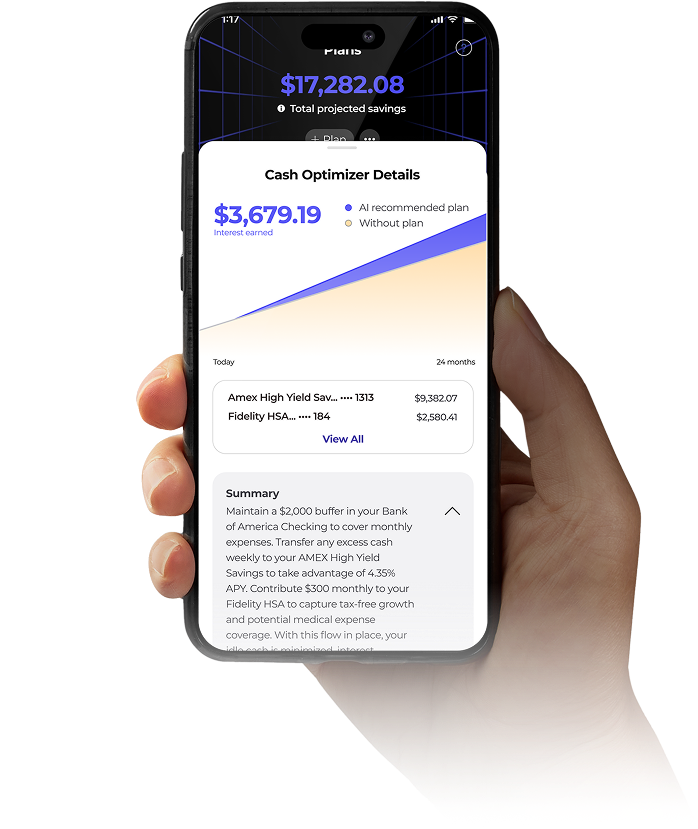
Any bank, any account, Piere makes it possible. In seconds, Piere analyzes your spending, income, wants, and goals, then creates fully automated plans for your money to follow.
- Save money automatically when you get paid — your money moves itself to the right account at the right interest rate
- Repay debt and stay debt free - Piere smartly determines which accounts to pay and when for the biggest impact
- Spend smarter — Piere keeps only the money you need for monthly expenses in your checking, moving the rest to high-yield accounts for safekeeping (and less temptation)
Get started in just seconds, and if you don't grow by at least $120 in your first year, we’ll give you back the difference.
Learn More
The Flywheel of Continuous Improvement
At maturity Level 4, teams unlock a continuous improvement flywheel:
Deploy the system.
Observe interactions in production.
Identify failures and successes.
Update eval suites with failures.
Archive successes as reproducible examples.
Improve the system using this data.
Repeat.
This flywheel is the real AI asset, not the prompt or model itself. Models will be obsolete next quarter; frameworks will evolve. The infrastructure to learn, measure, and improve is permanent and compoundable.
Without this flywheel, teams iterate slowly, rely on intuition, and repeat past mistakes. With it, every production interaction becomes a data point for improvement, systematically reducing risk and accelerating reliability.
Tip: Treat production as a source of insight. Every anomaly or success is an opportunity to strengthen the system. Invest in capturing, tagging, and learning from these interactions.
Investor-ready updates, by voice

High-stakes communications need precision. Wispr Flow turns speech into polished, publishable writing you can paste into investor updates, earnings notes, board recaps, and executive summaries. Speak constraints, numbers, and context and Flow will remove filler, fix punctuation, format lists, and preserve tone so your messages are clear and confident. Use saved templates for recurring financial formats and create consistent reports with less editing. Works across Mac, Windows, and iPhone. Try Wispr Flow for finance.
Why Engineering Maturity Beats Everything Else
Building reliable AI applications is not about brilliance—it’s about discipline. Teams that master documentation, testing, observability, and evaluation consistently outperform those chasing the newest model or prompt trick.
Engineering maturity allows rapid experimentation while limiting risk. It converts uncertainty into actionable data, chaos into structured discovery, and production failures into learning opportunities. Iteration speed becomes sustainable, improvements compound, and features become reliable before reaching users.
The lesson is simple: invest in the harness that lets teams tinker, experiment, and learn at speed. In AI, techniques change rapidly, models improve constantly, and the environment is unpredictable. What remains valuable is the capacity to discover and iterate safely.
Tip: Prioritize engineering maturity over flashy features. Build processes that let your team discover what works, measure it, and improve continuously. The system you create will outlast any single model or tool, ensuring both speed and reliability.
What’s your next spark? A new platform engineering skill? A bold pitch? A team ready to rise? Share your ideas or challenges at Tiny Big Spark. Let’s build your pyramid—together.
That’s it!
Keep innovating and stay inspired!
If you think your colleagues and friends would find this content valuable, we’d love it if you shared our newsletter with them!
PROMO CONTENT
Can email newsletters make money?
As the world becomes increasingly digital, this question will be on the minds of millions of people seeking new income streams in 2026.
The answer is—Absolutely!

That’s it for this episode!
Thank you for taking the time to read today’s email! Your support allows me to send out this newsletter for free every day.
What do you think for today’s episode? Please provide your feedback in the poll below.
How would you rate today's newsletter?
Share the newsletter with your friends and colleagues if you find it valuable.
Disclaimer: The "Tiny Big Spark" newsletter is for informational and educational purposes only, not a substitute for professional advice, including financial, legal, medical, or technical. We strive for accuracy but make no guarantees about the completeness or reliability of the information provided. Any reliance on this information is at your own risk. The views expressed are those of the authors and do not reflect any organization's official position. This newsletter may link to external sites we don't control; we do not endorse their content. We are not liable for any losses or damages from using this information.